Canal de Bourgogne

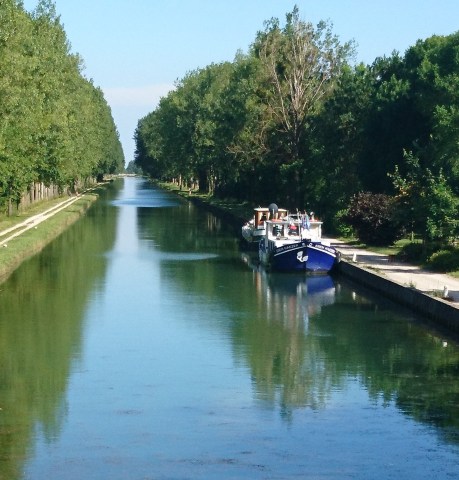
The middle of June saw us begin the next stage of our 2017 season – a cruise along the famous Burgundy Canal, the Canal de Bourgogne. This canal was conceived in the early 17th century but not completed until 1833. It sounded to us like quite a challenge: 189 locks crammed into its length of 242 kilometres, plus a tunnel more than 3 kilometres long. But it also held promise of beautiful countryside, historic chateaux and the city of Dijon, so we set off from Saint-Jean de Losne with great anticipation. Before we entered the canal, we filled up with diesel – 480 litres at €1.62 per litre = €780! As I handed over the cash I consoled myself with the knowledge that this would almost carry us through the rest of our season.

Refueling, Saint-Jean-de-Losne
Refuelling at Saint-Jean de Losne

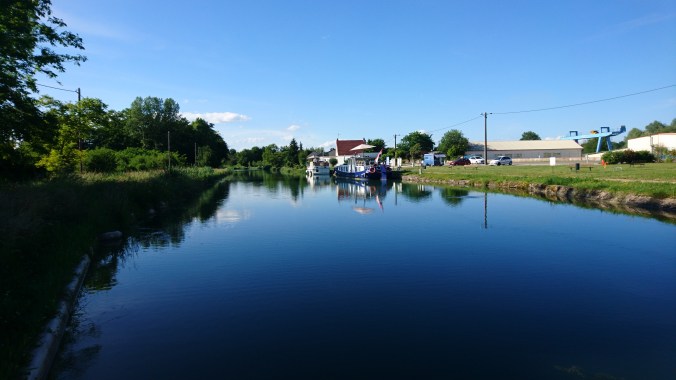
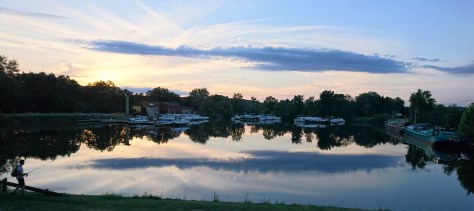
The first stage of the Bourgogne would see us reach Dijon across a fairly featureless plain, not entirely flat since it involved 22 locks in 30 kilometres, so we broke it into two days, with a stop at Lock 65, Bretenière. Not much there, although we did find a decent pizza place behind a warehouse not far from our mooring.

Mooring, Bretenieres2.crop


This section of the canal was thoroughly infested with weed, which would have been a problem for boats with water intakes for their engine cooling; we were lucky to have a closed system, so the only difficulty was thicker weeds fouling the propeller, which we could take care of when we reached Dijon. At least the VNF was busy working to harvest and clear the weed, with a strange reaper-craft and banks of weed deposited all along the canal banksides.

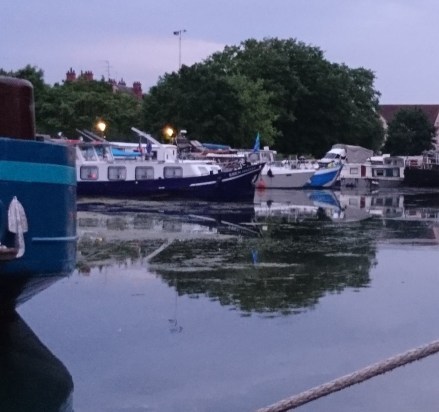
In Dijon, we initially moored alongside the quay on the south side of the Ile aux Canards, a smart place with new bornes for electricity and water. Only problem…. they needed tokens to operate and no one, I mean absolutely no one, knew anything about how to get tokens. Since we intended to stay in Dijon for a week, we needed access to power and water, so we moved across to the old marina. It was a delicate operation, since we needed to reverse into our mooring then tie up to tiny, ricketty, aged pontoons, using every bit of rope we had to secure ourselves, hoping our bow was not poking out too far into the channel.

Dijon mooring.crop

The old marina at Dijon was a funny old job. There were plenty of points for electricity and water, available for nothing, as the marina had been unsupervised since the old capitainerie burnt down a couple of years previously, and no one in the city administration had got around to imposing a new regime. We were happy; and, so it would appear, were numerous others, since the marina was mainly populated by old boats occupied more or less permanently by young folk rapt in their good fortune at finding free accommodation in a major city of France. We felt comfortable and secure, despite all the comings and goings; in addition to the floating squatters, there was a children’s playground adjacent to us (only really used in the afternoons as mothers brought their children home from school), a floating bar/disco (the Peniche Cancale) which mercifully did not have a late night license, and an embarcation point for the hotel barges which were in a constant state of arrival/departure throughout our stay.

The saddest tale we came across was an older Australian chap who introduced himself to us on our first day and proceeded without delay to tell us his story. He had invented something that would have earned him a lot of money but the patent was stolen from him so someone else was cashing in. He had arrived in Dijon some years previously with a campervan and had bought his boat, which he had been in the process of readying for cruising. He had then suffered a fall and had to return to Australia for medical treatment. While away, his campervan had been impounded, never to be returned, and his boat had been taken over by young squatters. He had managed to evict them and was living on his boat, and thought he would be ready someday soon to set off along the canal. Maybe. He wasn’t sure. And anyway, he had never driven it before…. or any other boat. So, maybe. One day. We tried to give as much encouragement as we could.

Down the Sâone

We had planned to cruise directly from Gray to Auxonne but the forecast was for a day or two of foul weather and possibly heavy rain, so we decided to get off the river to a little mooring at Maxilly, a short detour up the Canal entre Champagne et Bourgogne. There’s nothing much there, with a factory on the road opposite the mooring and the village a short bicycle ride away, but it was pleasant enough. To operate the electricity and water we had to cycle to the village, where we could buy tokens at the mairie, the boulangerie, and the hairdresser. The mairie and the boulangerie were closed, it being Saturday afternoon, but the hairdresser was open, so no problem. There is never a problem with a village hairdresser in France!

Maxilly-sur-Saone2

As we settled into our mooring, thinking about what we might cook for dinner, a van pulled into the carpark, at about 5.00pm. Over the next hour, an assortment of cars also pulled in, the driver or passenger approaching the van, before leaving again. Had we stumbled across a drug dealer’s rendezvous? After all, this was  more or less in the middle of nowhere, not a town square or main street but a featureless road between one small village and its neighbours. With some trepidation we approached the van for a better look. It turned out it was a woodfired pizza truck! The drivers had been placing their orders, to be picked up at an assigned time. So we did the same. Two fabulous artisan pizzas, full of flavour, cooked to perfection, enjoyed on our deck in the last rays of sunshine before the bad weather rolled in.

Pizza dinner, Maxillysur-Saone

When the weather cleared after a couple of days, we continued our journey down the Saone, to Auxonne – an interesting town which is well worth spending time in. It has a long history as a garrison town and was one of the chief defensive centres of Louis XIV’s noted military engineer Vauban: today the headquarters of the 511th Logistics Regiment, it was once home to an Artillery School where a young Napoleon Bonaparte first trained.

There are three choices for mooring in Auxonne; we ignored the well-appointed but expensive marina at Port Royal, and we also passed on the municipal pontoons where space was tight and in any case the services were switched off (damaged by that year’s winter floods, we think). We settled on mooring on the stepped quay just downstream of the old bridge, immediately by the Château d’Auxonne. This spot requires care with varying water levels but we figured we’d be OK, as long as we were also vigilant about wandering locals.

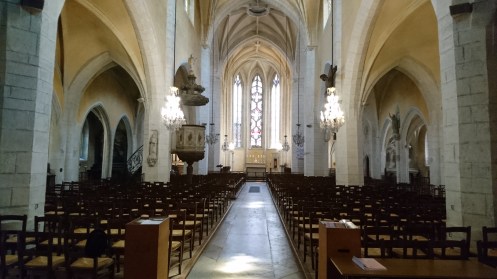
Auxonne has some excellent historical architecture – civic, military, domestic and religious. The Chateau d’Auxonne has elements dating from Louis XI, Louis XII and Francis i (15th/16th centuries) and was significantly enlarged and strengthened by Vauban under Louis XIV in the 17th century. The Eglise Notre Dame was commenced in the 13th century, with side chapels added in the 14th/15th centuries and the “crooked spire” of slate added in 1858. It has some impressive gargoyles!

Notable civic and domestic buildings include the hotel de ville (town hall), originally built in the XVth century for the Dukes of Burgundy; some half-timbered houses from the 15th century, and a set of fine turned-wood stairs and balustrades from the 16th century on another old house. There are also various remnants of military construction from across the centuries – ramparts, gates and towers.

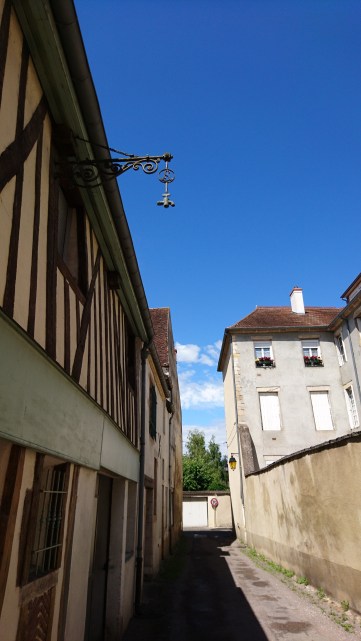
We particularly liked the half-timbered house of a local plumber, especially his unique but typically French sign advertising his trade.

Auxonne25

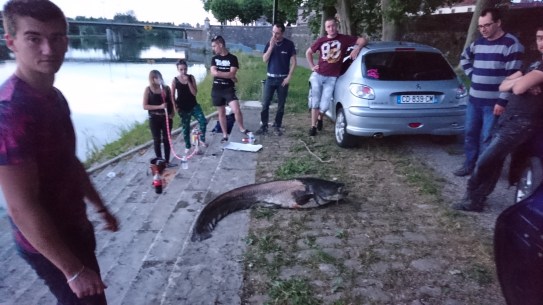
We stayed two nights in Auxonne and, sure enough, the stepped quay where we moored was a popular hangout with young locals and fishermen, though it didn’t really cause too many problems. On our second day we were amazed to see the size of the fish one man pulled out of the river… absolutely massive, on a standard hand line. The river is apparently full of these monster catfish! (We thought the girl with the pink hookah was an interesting touch as well)

Giant catfish, Auxonne7

Auxonne has a number of excellent choices for dining, whether lunch or dinner (no catfish on the menu), but we recommend the Restaurant des Halles, where we had an excellent meal in the sunshine of the town square opposite the church.

From Auxonne we travelled down the Sâone to Saint-Jean de Losne, the self-styled “centre of the French waterways”, so-called because it is a convenient stopover or departure for trips along several routes – down the Rhône towards Lyon and the south of France, north up the Sâone, or up the Doubs towards the Rhine, or along the Canal de Bourgogne or the Canal entre Champagne et Bourgogne. The town itself is pleasant but fairly unremarkable, except for the large gare de l’eau or marina, several ateliers des bateaux or marine workshops for repairs and maintenance both light and heavy, and a large number of boats for sale.Almost everyone who travels the French waterways for more than a season or two ends up spending time at Saint-Jean. We moored on the stepped quay on the river, very pleasant and handy to the several options for riverfront dining along the quay. Our choice generally was Bistrot La Cotinière.

Having reached the wide reaches of La Basse Sâone, we became aware of how much commercial traffic the river still sustained. Every day brought a multitude of vessels large and small – peniches, massive cargo vessels (mostly carrying construction materials) and river cruise vessels.

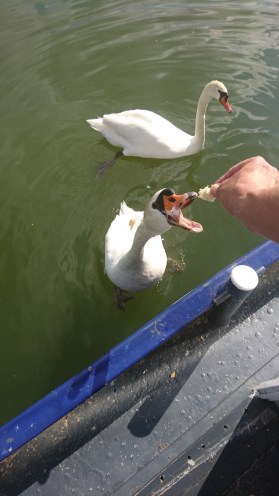
Like many other places along French waterways, it was also a place where swans expected to be fed.

Greedy swans, Saint-Jean-de-Losne6

Saint-Jean was to be our last stop on the river, as we turned westwards along the Canal de Bourgogne.

Gray

The River Sâone at Gray is wide and deep, one of the reasons the town had been an important port and trading centre for the Franche-Comté region.

The town, population about 7,000, has several places of interest to a visitor. The 15th/16th-century Basilique Notre Dame is a fine church, well decorated with a nice bell tower.

Basilique Notre Dame, Gray4

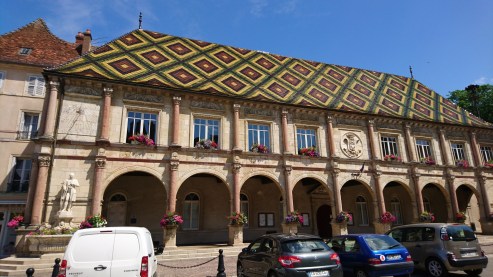
The Commune or Town Hall is a lovely Renaissance building with a colonnade, sundial, pink Jura stone columns and a roof of coloured glazed tiles like those found in Bourgogne.

Commune de Gray4.JPG

The Saturday marché, it must be said, was something of a disappointment, but we were delighted to discover one of the few female boulangers we have come across, with a woodfired oven, no less.

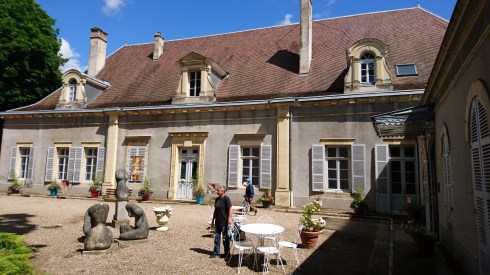
The Musée Baron Martin, an art museum, is housed in the chateau of the Count of Provence, brother of Louis XVI. It has a collection of 1200 interesting but not outstanding works – paintings, sculptures and Gallo-Roman relics.

DSC_0478

The Hotel-Dieu, or ancient hospital, first constructed in the early 18th century, is an interesting survivor, now converted and overbuilt into a nursing home but containing the original chapel and apothecary within.

In Gray we came across our first encounters with the traboule, or staircase tower, which we later found many variants of throughout Franche-Comté and Bourgogne. Built into the side of buildings, with tiny windows and low doors, traboules are essentially covered stairwells, often located in the courtyards of communal buildings and providing entrances to private apartments.

Although we found no memorable dining in Gray, we enjoyed a few days exploring the town and would be inclined to visit again if we had the chance. The mooring at Quai Mavia is comfortable and convenient, although it has a dearth of electrical/water points to match the ample space for boats large and small.

La Petite Sâone

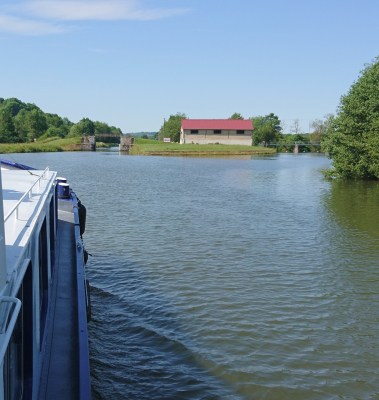
Leaving Corre we progressed through the last lock on the Canal des Vosges before entering the Sâone at its junction with the Côney River, which the canal had been tracking for the past week or so of our journey. At this stage the river, known as La Petite Sâone, is a canalised waterway, alternating between sections of unchanged river and wilder sections where the river has been bypassed by sections of canal with locks, weirs and spillways. So, while it is a river, it retains the intimacy and calmness of a canal, albeit one that meanders through fields and wooded hillsides.

Near Cendrecourt.crop

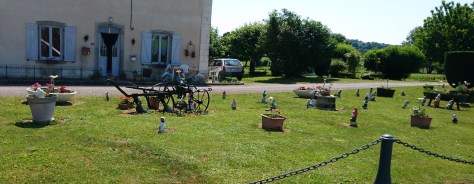
The first larger town we would encounter, the old river port of Gray, was several days away; in the meantime, we cruised at a leisurely pace through small towns and villages such as Fouchècourt, Scey-sur-Sâone and Savoyeux. Here, as in many other places we had passed, there were lock-keepers inordinately fond of garden gnomes

Ecluse 2 Cendrecourt, La Saone.crop

.Fouchecourt was a tiny village without commerce, but possessing a quiet charm with its farmhouses and old lavoir wash house.

At Scey-sur-Sâone we encountered one of the very few unpleasant characters on all our travels through France and Europe. We had pulled into the port de plaisance, into the only vacant spot we could find. The facility was operated under license by the hireboat company Le Boat; the office was closed but we located an employee and asked if it was OK for us to stay the night and how much might it be. He indicated that it would be €10, with water and electricity, and that his boss would be along later to collect. We plugged in to shore power and broke open a bottle to celebrate the end of a long and tiring day. An hour later a man came storming along the quay, yelling at us to get away. We tried to explain our earlier enquiries and encounter but he was having none of it. He said we were moored too close to a crane and had no right to be there, accusing us of telling lies and taking advantage.. By this time the sun was beginning to set and we didn’t have much idea of what we could do, but he didn’t care. No choice but to move…. somewhere! As it happened, there was a rickety old pontoon on the opposite side from the port. It didn’t look ideal but it was our only choice so we farewelled our nasty little Le Boat man and made the best of it. The best was nearly perfect, in the end, since the old wooden pontoon was a private mooring for a very nice little restaurant, where we enjoyed a delightful meal overlooking the river, with only a few paces to retire afterwards to our comfortable bed on Eben Haezer. In contrast to our earlier experience, our restaurant host (and the owner of our mooring)  was friendly, welcoming, and apologetic for his countryman.

Scey-sur-Saone6.crop

Before reaching Gray, our next major challenge was the tunnel at Savoyeux, not a particularly long or tricky underground passage but a tunnel nevertheless and our first one of the season. Once through, we found the river widening, more resembling a real river and allowing for faster, though still relaxed, passage through fields and forests.

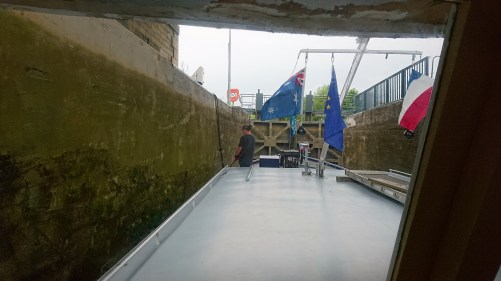
Before we reached Gray we came across a new (to us) method of controlling the locks in the canalised section of the river. Earlier, where locks were not controlled by lock-keepers, the automatic controls had been operated by a télécommande unit, a remote control issued by the VNF, which you pressed as you approached a sensor a couple of hundred metres before the lock itself. Now, it necessitated passing close to a rod suspended over the river, which a crew member needed to grasp and twist to activate the lock process. To add interest to the day, we shared our last lock before Gray with an adventurer in a kayak. Although they are not really supposed to do so, our kayaker entered the lock behind us and we helped secure and steady him to our side as the waters rushed out to empty the lock. As we left we waved him goodbye, while keeping a close watch on a dinghy full of fisherman on the other side.


Last days on the Canal des Vosges

The end of May 2017 also saw the end of our sojourn on the Canal des Vosges, which we had entered in September 2016 in our first season. This canal, only 122 kilometres long, was built in the 1870s following the Franco-Prussian War, which saw France cede much of Alsace-Lorraine to the victorious Prussians, thereby losing important maritime trade routes along the Rhine. It is the southern part of what was originally named the Canal de l’Est, the longer northern portion now named the Canal de la Meuse.

After leaving Côney, we cruised into the small town of Fontenoy-le-Chateau which, it has to be said, has seen better days, most of them quite some time ago – although it did flourish as a centre of embroidery for a while in the 19th century. Nevertheless, it has a charm to it and rewards a couple of days of exploration. Its 10th-century Château began a long decline after the Thirty Years War in the 17th century and now consists mainly of the ruins of its keep.

Fontenoy also has a handsome 15th/16-century Gothic church, the Eglise Saint-Mansuy, much of which has managed to survive various depredations.

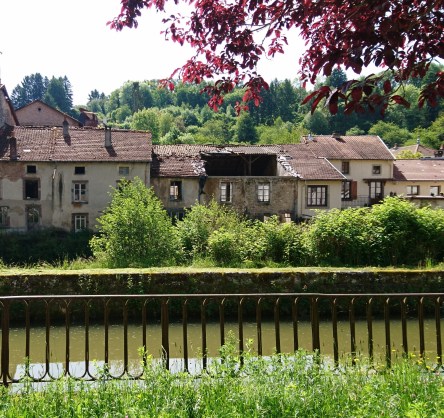
Not so much for some of the canalside houses… ironically, many of them were built using materials reclaimed from the château, although lately they’ve taken a bit of a beating.

Fontenoy-le-Chateau21crop

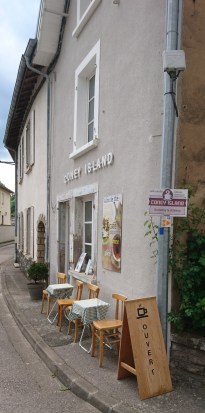
Even in this place, however, there is resistance to decay. We discovered a delightful maison de thé, with the charming name of Coney Island, where we enjoyed an ice cream and cake and nearly decent coffee.

Coney Island Maison de The, Fontenoy-le-Chateau3crop

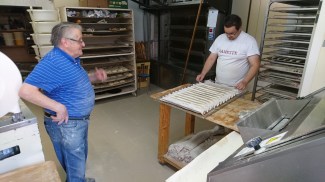
Our next stop, in Selles, did not reveal much beyond a very quiet village, except for a still-thriving boulangerie, for which we gave thanks.

Selles boulangers

Our last stop on the Canal before we entered La Petite Sâone was Corre. The town itself is not particularly interesting, although there are some interesting characters about, judging by canal traffic.

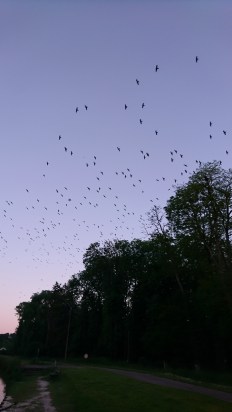
Corre is also blessed with a surfeit of crows, who gather in crowds in the evening despite the regular activities of people with guns aiming to reduce their number.

Crows of Corre

The most interesting aspects of Corre are the nearby attractions of the village of Jussey and the glassworks at the Verrerie de la Rochère, both of which we visited by hire car. Jussey is known for its waterworks…. its wells, fountains and wash houses (‘lavoirs’).

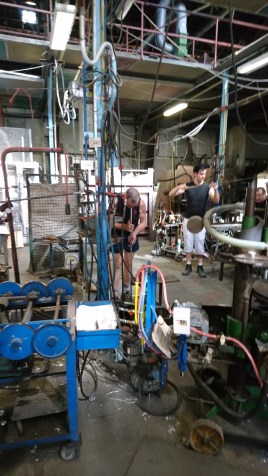
La Rochère is a fascinating centre of traditional and modern glassmaking, with daily demonstrations and a fabulous shop.

La Rochere Verrerie18

And now, we are set to leave the canals and flow with the river….


Into the countryside

On our third day we woke to clear weather and set off from Trusey, the summit of the Canal des Vosges, for our next stop at Méloménil, 14 locks down to a picturesque free mooring. It was a lovely run down the canal, although some of the locks had quite rough sides, and often very wet and mossy.

For dinner we sought out the nearby Ferme Auberge des Sept Pécheurs, a farmstay with dining, run by a delightful lady and her daughter and grandchildren. A salubrious establishment it was not, but we were provided with a delicious, substantial homestyle meal in a warm, inviting space. We enjoyed it so much we returned for breakfast the following morning! And we were also delighted to meet Peter, an older Swiss gentleman who was on a massive walking tour through France.

The next day was a sunny run through a further 13 locks to another free mooring by the delightful Auberge du Coney. Once again, pretty much in the middle of nowhere, although a relatively simple ride several kilometres to the spa town of Bains-les-Bains, if we had stayed for longer. Maybe next time, for we were keen to get on to Fontenoy-le-Chateau and beyond.

Start of our second season

After a pleasant couple of weeks in our winter port of Épinal, the French autumn sun rose on 18 May 2017 and we cast off to begin our second season of barging. Our first day saw us busy with 15 locks up the higher part of the Canal des Vosges, but we consoled ourselves with the thought that we had reserved a table at a very nice restaurant for our first evening on the water.

Ecluse Golbey, Canal des Vosges2

We had hoped to pull up to a small mooring in the village of Chamousey where the restaurant was located, but we found we had been beaten to it by an English couple on their narrowboat, so we continued upstream one more lock and a few kilometres to Trusey. No matter, we thought; we donned our evening wear, mounted our bicycles and trundled off in the direction of Le Clamosien, our destination for dinner. I thought I was very clever, having put the coordinates into my smartphone and let Google Navigation find the shortest route. The shortest route it was, but it turned quickly from a formed road into a barely discernible track through a paddock, then a deep muddy track through a dark forest.

Detour on way to dinner from Trusey to Champusey

We eventually made it to the restaurant, having managed to keep the mud from rising and splashing higher than mid-calf. Ah well, at least we were in a fine space with the prospect of fine food. And we were not disappointed: the service was fantastic, the food was magnificent.

Our lovely waiter even ventured out in the developing rain after dinner to show us a shortcut back to the canal towpath, a much better option for cycling back to the boat. It was a brisk ride through howling winds and driving rain, with lightning and thunder exploding all around us. We arrived back on board, our first night out of port, soaked and giggling with embarrassed, well-fed delight. The meal kept us in a great mood through the following day, as it bucketed down with unrelenting rain, keeping us inside as we decided to delay our next stage of the journey until it cleared.


Return to Épinal

After a lovely (hot) Australian summer, April 2017 pressed in and the cooler autumn days murmured of our return to France, our boat and the canals.

Our plan this year was for me to arrrive in late April and spend some days preparing the boat, “dewinterising” her and getting her ready to cruise, while Jane would join me a week or so later, after spending time with her Mum in Brisbane.

On my way to Épinal, I stopped off in Paris for a day, so I could walk across town to the port de plaisanciers at the Bassin d’Arsenal, where we planned to spend a couple of weeks in August. I wanted to check it out, but also I’d heard it was a better bet to reserve a place in person rather than by email or telephone.

I arrived in Paris on 28 April, a marvellous, sunny spring day. I’d booked into a small hotel, the Albert 1er, midway between my two rail stations – Gare du Nord and Gare de l’Est. My room was tiny, but pleasant; the elevator was the smallest I’d ever seen, barely big enough to hold me and my two bags. Easier than four flights of narrow stairs, though.

That evening I wandered around the corner to treat myself to dinner at the Bistro Terminus Nord, on one side of the big square facing the Gard du Nord. It felt exhilarating to be free and at large in Paris on this, my first visit to the city. The streets were crowded in the early evening sunlight, everyone on their way home or, more probably, to meet friends for drinks and dinner. Do the French have a word for rendezvous?

I, on the other hand, was solo…. but not alone. It felt strange but by no means isolating as I strolled among the throng, and took my seat at the restaurant. The Terminus Nord is a fabulous old place, very traditional, extraordinary decor, specialising in seafood. And it has about a hundred waiters, or so it seemed.


I only wished Jane could have been with me to experience the thrill of my first night in Paris.

The next morning, I walked 4.5kms to the Bassin d’Arsenal, basking in another magnificent spring day and soaking up impressions that rushed at me at a furious pace. Along broad boulevards and avenues, across Place de la Republique, across Place de la Bastille, at last to the broad basin of the Arsenal.


The very nice young man at the Capitainerie took my details and allocated us a spot for our August visit, all in a few minutes and, to my surprise, without needing a deposit.

It was all done so quickly and efficiently, it left me with plenty of time to make it back for my train, so I decided to walk back the 4.5kms to my hotel, to soak up more of Paris on foot and above ground.

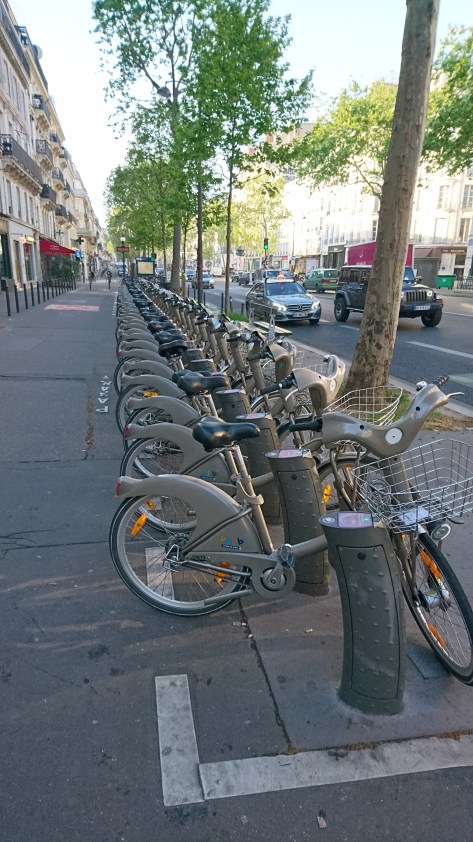
As I walked I could not help but take note of the numerous bike stations operated by Vélib, the city’s fabulous docked bike rental system. Unlike the cheap dockless operations that seem to be sprouting in other cities, Vélib is beautifully coordinated, easy to pick up and drop off, and resistant to dumping. I never, on that day or subsequently, saw a dumped rental bike in Paris. There are dock stations literally everywhere in the central arrondissements. And you see people riding the khaki bikes on almost every street, at almost every moment.

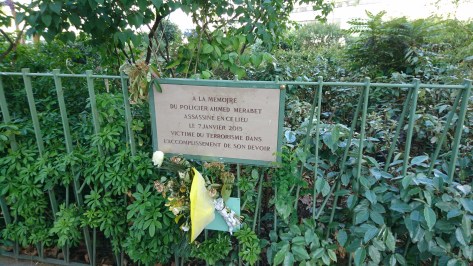
DSC_0032There was one sobering monent when, walking along Boulevard Jules Ferry next to the park that follows the canal tunnel, I was pulled up by a small sign that commemorated the death of Ahmed Merabet, the policeman killed during the January 2015 attack on Charlie Hebdo.

DSC_0049

It was a sombre but also surreal moment, surrounded as I was by Parisians enjoying the weekend sunshine, jogging, strolling, pushing their babies and leading their dogs. I must admit I hastened my pace for a minute or two, checking my surroundings more watchfully but, as Parisians in every direction blithely went about their leisure, I quickly relaxed once again.

It was easy to be charmed and reassured by the sheer beauty of my surroundings, as well as the delightful discoveries along the sunny streets …. an old tile workshop, a shady canalside park.


The next day I caught the train to Épinal and by the afternoon was back on board. It was surprisingly easy to open up Eben Haezer after she had been closed down for the winter; within an hour or two I had reconnected the water pumps and filled the fresh water tanks, reconnected the electricity and started charging the batteries, and opened all windows and doors to air the boat. Contrary to my expectations, she was not musty, mouldy, dusty or damp, and everything was exactly as we had left her.

In preparation for Jane’s arrival I did find a couple of opportunities to tart the boat up a bit. I bought some plants for our little deck garden; and one day there was a “brocante” market on the dockside, where I withstood the temptation to buy a shipload of lovely but useless stuff but managed to find some really lovely linens which I thought we might use as table runners.


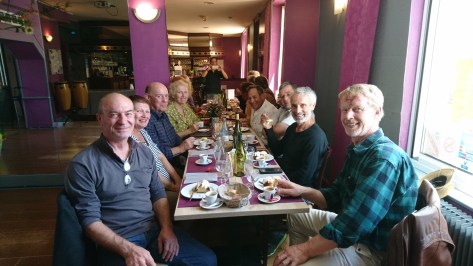
In Épinal I caught up with old friends from the previous year, including our Australian friends Knud and Erica on their boat Linquenda, as well as our great mates Fredi from Switzerland and Ron from the US, who had been joined by his brother. We enjoyed a fab meal with them and others one day at a cool little bistro across the port.

DSC_0056

It was the formation of these friendships that made our stay in Épinal very special. People were generous, interesting and open. One day we might have Ron, the ex-Marine and current ‘pirate’ to dinner on our boat with his brother; another day we would be on his boat meeting new people like Guillaume and Naphthy, young locals. Ron is from all over but is a Texan kinda guy… I’m pretty sure it was tacos that night.


Premier Season – some observations

Lesson Number One from our first season – Just. Slow. Down. If you think you are travelling slowly enough – Slow. Down. Some. More.

This rule applies both to the speed at which you and your boat are travelling at any given time, and also to the distance you try to cover in any given day, week, month or season.

Speed 

Our boat displaces more than 30 tonnes and is around 19 metres long. It is driven by a 110 horsepower motor with a throttle but no gears apart from forward, reverse and neutral. It doesn’t have brakes. It has a flat bottom with no keel, which gives access to shallows but also means it has no cut through the water, performing more like a puck on ice.

These characteristics always formed a part of our consciousness, but it took time for us to realise just how much they meant. You just learn from experience, I guess, that approaching locks, banks, quays and other craft – indeed any manoeuvre or operation – demands a calmness, a slow speed and a willingness to back off and try again rather than resorting to more throttle and radical rudder.

There can be pressure to speed up, when you have another boat waiting behind you as you enter a lock, or waiting on the other side for you to complete your entry and exit so they can take their turn. As the season wore on we learned to ignore that pressure and go at our own pace.

Plus, it’s a barge. It’s not a fancy lightweight plastic boat with double bow and stern bowthrusters that can move it sideways, stop quickly when reverse is engaged or take tight angles. There’s no point in trying to operate the boat as a sportscraft.

Slow. Graceful. Calm. Incident-free. The way to go.

Distance

We definitely planned our initial season badly, trying to cover too much in too short a time. We are glad that circumstances (and friendly advice) more or less forced us to curtail our trip early, stopping in Épinal rather than trying to push on in haste to Roanne.

The thing is, you are travelling at not much more than 5-6 kilometres an hour – on a canal the official limit is 6kph in any case. And there are so many things to see, and so many more that present themselves unexpectedly.

Our first season saw about an equal split between days of travel and days of rest. I think in the future we would increase the ratio of days of rest by at least 50% and better still double them – two days of rest for every day of travel.

This would give you the time to stay in a place for a while, get to know it, relax and enjoy the town/village/countryside without always thinking about the next cruise day, the next stopover.

Especially early on, we had days of travel where we were underway for 7-8 hours. I see blogs and accounts of other cruisers where this seems common. We have decided that apart from special sectors that demand it, this is too much. We want to leave a place relaxed and at a civilised hour, and travel until no later than early-mid afternoon, perhaps an average something under 5 hours a day.

This leaves us still fresh and keen to discover the pleasures of our next stop, but it also means, more often than not, that we can easily find a place to moor, before the late-afternoon traffic arrives.

And if you find a place you love – for its sights or its food, its serenity or its scenic beauty, or even better for the people you meet there – why on earth should you hurry away from that?

Our future itinerary planning will take this into account and will aim to give room to speed up if need or mood dictates, rather than struggling to find ways to slow down from a packed and rushed voyage plan.

Locks

We only did 142 locks in 2016, which was a shortened season for us. In future seasons we will probably do more. It was a great learning experience, a traumatic test of resolve and a fascinating insight into the engineering and social life of European waterways, all rolled into one nerve-racking package.

We won’t bore you here, since we’ve mentioned some of our experiences in our other posts, but ere are a few things that stick out.

Some locks are very, very big. On rivers, and on big commercial canals. Some are quite small, although none is smaller than about 38 metres by 5 metres, the French “Freycinet” standard.

We probably experienced about half a dozen different mechanisms and systems in our first two or three dozen locks. Some, especially the big ones, are controlled by a person in a tower. Some are activated by a laser beam triggered as you pass it. Some are alerted by a remote control you are given, but still require you to activate the mechanism once you are in the lock by raising a pole (the blue one, not the red one!). Some are alerted by twisting a pole hanging down in the middle of the canal but also require the blue-pole touch. Some are manually or electrically operated by lock-keepers, with or without your assistance.

Generally, a single red light means the lock is not ready for you; a red and a green light means the lock has been activated (filling or emptying for you); a green light of course means you can proceed into the lock. A double red light is not good, it often means the lock is out of action for some reason.

Our first season taught us the following things:

  • locks are not there to stuff you around; they are navigation aids to rivers or canals that would otherwise be impassable. So they just have to be dealt with.
  • lock-keepers for the most part like what they do and want to help; they have their bad days like all of us, and they get pissed off with people constantly doing dumb things or being rude; but we found them generally wonderful, rarely a bit grumpy or lazy and frequently absolutely delightful. We always had a supply of small cans of beer or soft drink for those helping us through several locks; we always helped with manual winding mechanisms when we could; we always said bonjourca vamerci, au revoir or prochaine or bon chance, as appropriate; and we always (or almost always) found unstinting, generous assistance with our passage.
  • what the VNF does is nothing short of magnificent. I am sure the system costs a great deal more than it recovers in user fees. Apart from local traffic, most of the system’s users are not French citizens. Maintenance can be a bit patchy but in several thousand kilometres of waterway, much of it far removed from population centres and industrial or commercial production, we found a lot to admire and be thankful for. We fly their flag proudly and with gratitude.
  • locks can be dangerous and need to be treated with respect. We don’t wear life jackets unless we are instructed to, but we take meticulous care of ourselves in locks. Firm footing, gloves, ropes carefully organised, taking time to make sure things are correct and safe. A sharp purpose-designed knife in pocket in case there is a necessity to cut a line. Strong visual and verbal communication between crew members. Not making assumptions but checking every step. Not allowing people – lock-keepers or onlookers – to distract from the task at hand at key moments with casual conversation or idle questions. Do everything slowly and deliberately. Back off and start again if there is doubt. All these things work to avoid the horror of a fall into the lock, a finger or leg caught by a tensioned rope, a boat caught on an obstruction, or just a scare that can ruin the calm and enjoyment of your day.
  • in 2016, even with a shortened season and even though we did stretches on rivers with only a few locks, we averaged 5.5 locks a day. In future seasons, depending on the waterways we choose, that may increase. Locks are a daily part of cruising through France. It’s as well to adopt an attitude and an approach to dealing with them that adds to your experience, not as something to be endured or grumbled about. As it is in our minds right now, we can’t imagine returning to the canals without the lock experience; it’s part of the charm, the attraction and the call to return.

Moorings

The variety of lock systems and mechanisms has nothing on the bewildering array and standards of mooring you will confront when you cruise the European waterways. We covered the field from grassy banksides in the middle of nowhere with no bollards or other objects to tie up to, through bustling modern marinas with floating pontoons and every conceivable facility, to heavy stone quays in the middle of large towns.

Every morning when we set off our minds were filled with questions about the next stop – would there be a space available;  should we ring ahead; was there an alternative within reasonable cruising distance; did it have power/water; would it require difficult manouevring?

In our first season, we only had recourse to moving on from a planned stop once. We only once had to raft up to another boat because there was no space left. We only struck three ports or mooring places out of 26 that called for “hairy” or nerve-wracking final manouevres (three is more than enough, I can assure you!).

Most of our moorings that we paid for had adequate electricity and water – although Anseremme only had 6 amp power, which limited our systems a bit. The average price for a paid mooring was generally less than €10, with only a couple of exceptions. Eight of the 25 stopovers between Schoten and Épinal were free of charge.

Particularly in the latter part of our trip, we tried to arrive at moorings in the mid-afternoon or earlier, which meant we had a better chance of securing a berth before the late afternoon rush.

We collected a wide array of electrical and water connections and extensions to deal with the norm, which we found was variety.

Weather

We failed to keep detailed logs of weather conditions, so we can now only give you an estimate. From memory, about one in five days experienced significant rain. About two in five days experienced very strong heat and sunshine (this was in August and September). The other two out of five days were somewhere in between, perhaps with a few light showers some days, perhaps with periods of hot sun, but mostly either patches of sun with scattered cloud, or overcast but bright.

We wore hats, we wore sunglasses, we wore shorts and t-shirts or polos most of the time. We got suntans, especially on our exposed legs and arms and necks. We used sunscreen. In rainy weather we wore rainjackets, but only light ones because even in the rain the temperatures were moderate.

For the most part – or all of it, to be honest – we loved the weather that France threw at us. We had got lucky, I suppose – in May/June 2016 there were flooding rains through much of France with much damage along the rivers, some loss of life and many boats stuck and unable to move.

In the latter part, in late September, we noticed the arrival of strong winds, even though the days were still warm and sunny. This made navigation more tricky as the winds blew our boat across the water. This may be a normal feature of this period and, if so, we feel we should take this into account in the future, because it’s not pleasant.

While we were in Epinal at the end of our trip, we really noticed the change in weather. The summer was quite late in finishing really, with lovely hot days right through until the beginning of October. Then one day it just decided that was the end of it, with no transition. It just went colder. With more grey days. Not more rain, but certainly more coats and beanies. We both like cool weather, so it was no problem, and we loved following the changing colours of foliage as autumn deepened. But we were glad of our efficient central heating.


Premier Season – review of the boat

No matter how many books, blogs and other accounts you read of cruising the canals and of the experiences of others, nothing really quite prepares you for the reality of navigating a large old steel boat along narrow waterways, living on it every day and coping with the challenges thrown your way.

For the sake of the record, we might try to list a few of the things we found confronting us, the little things we found that made life interesting, or more comfortable, and the things we might like to change or improve for future seasons.

Every person, and every crew, is different in their preferences, tastes, expectations and ambitions. So these are personal observations, even if a few of them seem to have greater universality than others.

How to be very glad you bought a boat that was already well-equipped and in excellent condition

Some people have a desire to buy a “project”; we didn’t. It was wonderful to be able to set off on our adventure without spending months renovating, redecorating, equipping and setting up our boat. We had probably 80% or more of what we needed, and the remainder was easy to buy and fit or stow. From major equipment (like a recently-rebuilt engine and a generator in good working order) down to sheets and towels and plates and cutlery, Eben Haezer was pretty much ready to go and much of what we bought were personal choice items.

To a large extent this was because we bought a boat that was lived on full-time by a professional experienced boatman, rather than a part-time cruiser being sold by someone from another country who only used the vessel a few weeks or months a year.

The previous owner, Pierre, bless his heart, left us with a fairly comprehensive set of mechanical tools, engine spares including belts, filters, automatic shaft greasers, cleaning cloths, oils and lubricants and cleaners.

All the important systems and major pieces of equipment on the boat – engine, generator, water and waste pumps, toilet, water heating, central heating, electrics, water tank and plumbing, cooking range and range hood, combi-oven, lighting, radios, steering lines, ground tackle and ropes, fenders, fuel tanks and lines, communications/navigation equipment and antennae, washer/dryer, portable A/C unit, refrigeration – were in excellent or near-new condition.

This is a fantastic advantage in setting off with confidence, with minimum fuss, and in superior comfort in one’s first season of cruising.

How to wish you had more documentation and/or time to learn how all these wonderful systems work

This was our own fault, I guess, since we had more than adequate time to bother the previous owner to go through (just once, more, please ?!?) how to operate or understand the mysteries of the electrics, pumps, boilers, engines, gears, greasers and so forth. But really, in the end, how much time can you expect him to spend on teaching you what he no doubt thinks you should know already?

On the other hand, there was in our case, probably the same as for just about everybody on every boat, a distinct lack of documentation – operations booklets, manuals, spares lists, etc, for the boat’s major systems and equipment. We should spend time collecting what we can from the internet and other sources. It will take time, but it will be worth it for us in the end and might form a legacy to any new owner when the time comes to sell our boat.

How to be grateful for, or reconcile yourself to, the systems, set-up and equipment you have, and what you might add

Engine, cooling, transmission, drive and steering

Our engine is a DAF575, a true workhorse of canal barges pushing out 110 horsepower. Made in 1973, rebuilt in 2014 with only 182 hours when we bought her, she is reliable, worry-free and powerful enough for our needs.

The transmission and drive are strong and simple. I haven’t actually identified the make of transmission (still trying) but it works! The shaft has three greasing points, equipped with SKF System 24 “set-and-forget” automatic lubricators. These are marvellous little things, gas-operated, which you dial to pre-set the rate of lubrication and then just check annually for replacement. We also have manual lubricant injectors in reserve in case we ever need to override the automatic system.

Steering – simple chain and cable system. With a big wheel, heavy rudder and some 30+ tonnes of displacement, it works well and easily and, we hope, never or rarely suffers a breakdown – in which case we have replacement cable which is easily and quickly fitted, even in an emergency. We would never go hydraulic, which is complicated, sensitive, maintenance-heavy… all the wrong words.

Engine cooling – we are lucky enough to have a closed system, rather than a raw water cooling set-up. No inlets, no filters, no pumps and no impellers. Driven by engine pressure, cooled along the hull, it just goes and goes. Never a fear of impellers disintegrating; never a need to clean weed and other debris from the inlet or the filter. We have heard of, and spoken directly to people who suffered it, boats who have had to stop every few hours in a heavily-weeded section of canal just to clear their inlets and filters. Not a problem for us!

Power and electrics

Our system is set up to select between no power, shore power, generator or main engine for the source of electrical generation/supply. Shore power and the generator provide 230v AC; the battery circuit is 24v DC, stepped up to 230v via a 3000-amp inverter and stepped down to 12v for controls, radios, etc. As far as it goes, it works well, although there are a few eccentricities in the circuit design, and an unfortunate spaghetti complex of wiring which one day we will get organised.

The generator is a Lister 7Kv unit, not new but reliable, air cooled and fueled with red diesel (much cheaper!) stored in a dedicated steel tank. It has a separate 12v starter battery and is remotely activated via a starter button and kill switch in the forward cabin, and also on the gen set itself. When running, it supplies more than enough power for all our needs. It is also noisy and creates a lot of vibration, being a BIG unit, located in the forward well. If you started out new, you may well decide to buy a much smaller, modern, silenced unit in a muffler box. But we have what we have and it does its job when required, which is not often enough to worry.

We learned early on that access to shore power requires (1) a lot of extension and (2) a multitude of connectors. So we have our basic shore power lead plus another 40 metres of extension lead, plus connectors that match two-point and three-point, male and female junctions. Since we tooled up in that area, we have no problems.

No problems, that is, as long as the power supply is reliable. On-shore power supply is generally 10amp, rarely 15amp, but sometimes as low as 6amp in smaller moorings or where you have to share a point with another boat via a splitter. It means you have to be constantly aware how much load you place on the supply at any given time.

We also have a small solar system, basically two rigid panels on the wheelhouse roof and a small regulator, ostensibly providing a trickle charge to our house batteries. I am not sure how much charge they are producing, to be honest, and the panels look to be a bit old. We will definitely look to upgrade this system in the future.

Cooking, heating and cooling

We were concerned at first to find that the stove was a domestic style four-burner electric set; we have always preferred cooking with gas and we were concerned the drain on power would be a problem. We were persuaded, though, when we met so many professional boatmen in Belgium who refused to have gas on board (for reasons of safety) and the cost of installing a gas system – external fixed steel ventilated gas box, plumbing and a new range. With shore power we are OK; otherwise the generator supplies more than enough and even then we only need it for an hour or less. One thing we would like to investigate is a two- or three-burner inducton cooktop to replace the old iron-element four-burner.

We inherited a counter-top combi-oven – a combination of microwave and convection over/grill – that proved to be a marvellous bit of kitchen kit. Programmable or manual, it made thawing, roasting, grilling, baking and reheating very easy and power-efficient. Thoroughly recommended, and less power and space than a conventional oven.

Being Australians, we were sure bbqs would be an important part of our cooking mix, so we bought two small units – one gas and one charcoal-burning. As it turned out, we used them less than we thought we would, but they are both wonderful. We have cooked/baked whole coquelettes, and many, many sausages and brochettes, both vegetable and meat-based, and even on occasions things like rice and pasta. We prefer the charcoal bbq but use gas for quick convenience. The French are not huge users of bbqs but when they do, they love masses of smoke!

The final piece of our cooking/kitchen kit which we added was a coffee machine and grinder. We’re happy with a plunger (French press) but there is always the problem of disposal of the grounds – on a boat, harder and messier than you might think. Our espresso machine is nothing flash but it delivers an adequate shot…. regrettably but also thankfully, better than 90% of the stuff you might be served in a French café!

Heating is provided by our central heating system with a diesel-powered Kubola boiler and six radiators throughout the boat. It’s fabulous, cheap and finely adjustable and could easily sustain us through the harshest French winter. We would never consider a solid-fuel stove because (1) it takes up a lot of space, which is at a premium anyway (2) it requires sourcing and storage of fuel – wood or briquettes or whatever, which is a hassle and another space-destroyer (3) it needs another hole in the deck for the chimney, and holes are always potential leak-points and (4) really guys, it’s romantic but it’s dirty! Needs cleaning every day, lots of ash, lots of tar on the chimney… nooooo!

Cooling is basically open doors and windows, plus two or three small fans for circulation. We were bequeathed a small portable air conditioner with a window exhaust, which we used on some of the hottest summer days but was never really a central part of our climate control. Nice, but not essential.

Mooring and ground tackle

We have a massive anchor with many metres of heavy chain, and a massive manual winch to which an electric winch has been added, driven off the generator. Anchors on inland waterways are basically emergency equipment, and we have never used it. In fact, we are not certain we know how to… something we should probably put on our to-do list.

Eben Haezer has heavy duty double bollards on either side at the bow, and single bollards aft, plus multiple belay points fore and aft and at intervals along the gunwales. We were bequeathed four x 20-metre lengths of good quality rope for regular lock work and mooring, plus extra heavy-duty nylon rope for long-term mooring. We found the system of having four sufficient lengths of rope – one for each side fore and aft – by far the best system for fast adaptation to situations such as locks and port moorings, without needing to swap ropes from one side to the other at the last moment. Plus we found that in many locations, the more mooring lines the better, two at each end secured in opposite directions, gives greater security and stability.

Before leaving Schoten we had four mooring stakes made up for us from short lengths of angle iron, sharpened at one end at with a flat plate welded to the other end for banging in with a heavy mallet. We only used these a few times but found them very useful for when there was no bollard available on shore. Best to use them in pairs, hammered into the ground at cross-angles; otherwise you might find them easily dislodged by the wash of another passing boat.

We also made up a passarelle, or boarding gangplank. Ours is simply a sturdy ladder with sections of thick marine ply and checkerplate secured to one side. This provides a safe, secure – and cheap – gangway for accessing the shore when the ground is much lower than the deck, or uneven, or otherwise requiring a jump. It came in handy on many occasions.

We inherited a set of fenders when we bought Eben Haezer. These included four solid composite glissoires – long, narrow fenders that protect the bow and stern on each side. We also had four heavy-duty inflatable fenders, one at each end and each side. This are primarily for additional protection and should not be used to take the full brunt of any contact, as they would simply pop under the weight of the very heavy boat (as one did!). Despite this protection, we still managed to bump and scrape the hull from time to time; at first we worried mightily about this but we became used to it, as other boaters seemed to, and we just kept our brushes and paint handy for periodic touch ups.

Navigation

We inherited a laptop, loaded with software from PC-Navigo, connected to our AIS (Automatic Identification System), which allowed us to plan and monitor our travels. You could get by without it (unless you are over 25 metres in length, in which case it’s compulsory) but we found it fantastic – for planning our journeys, seeing any operations (such as locks or lift bridges) ahead, and monitoring our progress in real time. Plus it told us when any other large vessels were approaching, from ahead or behind, allowing us to take whatever action we thought necessary to avoid or avert. Very reassuring!

Lighting

The wheelhouse is the only place with 12v overhead lighting – running off the same stepdown converter as the radios, AIS and other control equipment – meaning the “bridge” had lighting whether or not shore-power or 230v inverter power was available. The rest of the bat is equipped with 230v lighting, running off the inverter, which we think is perfectly fine, given the low current draw. We are not great fans of the lighting design or fittings, though, and it proved to be difficult to find replacement bulbs/LEDs for them, so we will probably replace those in the future. For 2016, it was no problem.

Refrigeration

We inherited a full-size domestic upside-down frig-freezer, which we adore. It uses the majority of our daily power draw, but who cares. We buy fresh as often as we can, but we love to buy lots of good food, and when you are not sure when you can next buy a good piece of beef or a succulent free-range whole chicken, or a pack of  lovely laminated pastry or whatever, a freezer is a precious thing. We love it, and we knew we were never going to compromise with a teensy bar fridge, eutectic camper-style chamber or an ice box.

Water

We have a rigid plastic water tank in the rear of the boat that holds 1100 litres. For two people this is quite adequate, although we found it amazing how quickly we can go through it. We fill up at every – I mean EVERY – opportunity we get and so never found a time when we were short of water…. although we frequently came across other boats, mainly hire boats, who moored up and rushed to the water taps to replenish their exhausted supplies – mainly, we suspected, because they had simply shunned opportunities to fill when they could.

Early in the season we found it necessary to stock up on extra lengths of hose, for those surprisingly frequent occasions when the taps were located too far from the boat. We also learned to have a box of fittings of various types and dimensions, since French villages, towns, ports and moorings have agreed to disagree on standardisation. Plus you need spares – because inevitably you will leave a fitting behind at some stage.

For hot water, we have a small immersion-coil electric heater in the bathroom, providing hot water to kitchen sink, shower and hand basin. Some people love the idea of a boiler running off the main engine but for us that’s an expensive addition to the piece of machinery that’s central to your motive power and the small room it’s located in. For us, if we cruise for a few hours the power that the engine generates is sufficient to heat enough water until the next day; or we can simply plug into shore power (which we would pay for anyway).

Bathroom and laundry

We love our bathroom, set up as it is in a domestic style rather than a pokey shipboard manner. We have a basin set into an expansive vanity – believe me, even in a shipboard bathroom, having plenty of surface for your odds and ends is wonderful, especially when it doubles as your laundry. We have a small bath – I guess what you would call a three-quarter bath – with sufficient room to stretch out in or to take a perfectly adequate sit-and-crouch shower using the hand-held rose. Ideally, we would lift the deck height above the bath to enable a standing shower but, as it is, it is perfectly comfortable and efficient, as well as space-effective.

The toilet is a macerating marine toilet, with a plumbed cistern flush system. Apart from the noise it makes when the waste pump operates, you would not really know you were not using a standard domestic flush toilet. Gotta love it! We do not have a blackwater holding tank – there isn’t much point, since there are hardly any pump-out points in France, so you would be reduced to pumping out a couple hundred litres of the stuff at the unfortunate place of your choosing, rather than one flush at a time.

Our bathroom also holds a front-loading washing machine and a condenser dryer. They are both marvellous pieces of kit which we love. We could, if we were forced to, take our clothes to local laundromats, of which there are plenty in France although sometimes located at a fair remove from the mooring, and always requiring coins or tokens which you may not have on hand. With our own washer we can wash wherever and whenever we are, independent of the weather and location. Kind of like at home, right? The condenser dryer, instead of blowing hot air onto the clothes and out into the laundry, extracts moisture before draining it away as condensed water into a separate reservoir, reducing both heat and moisture inside the boat.

General appearance, fit out and decor

Some people love everything to be sleek and modern; others like it all to be olde-world, all varnished wood and polished brass. We sit somewhere in the middle. Eben Haezer is 100 years old and has graceful old-fashioned hull lines. Her superstructure and interior fit-out is much newer and to a very large extent is pragmatic more than romantic.

Interior linings – walls and floors – are modern composite materials, and most of the woodwork in the wheelhouse is also non-traditional, much of it simply painted white. The windows in saloon, bathroom and cabins are large, aluminium-framed, sliding style. The advantage of this modern fit out is the work and cost of upkeep – both minimal – but the downside, if there is one, is an absence of “atmosphere”. We decided we quite liked the space and ambience and lightness of the interior; tempting though it is to introduce a traditional touch with wooden linings and brass fittings, we are probably better off spending that money on good quality decor such as light fittings, cupboards, chairs, rugs and other stuff.

Entertainment

Most liveaboard boats and every camper van in Belgium and France comes with a satellite dish and big TV, so we thought we would follow suit. We bought a large flat-screen TV in Schoten and a satellite decoder and signal detector in Antwerp (the boat already came equipped with a dish). They work fine and we had access to dozens of channels in English. As time went on, though, we found we really didn’t watch too much; we’re not big consumers of TV, even at home. Butwe have for when we want it, so all good.

Music is provided in the wheelhouse via a car radio in the overhead console, with good but not great speakers. We plugged my phone into the radio to access the playlist stored on the phone, or via streaming services when we had a free signal or felt we could afford to burn some of our data allowance. The system is adequate but at some stage we will probably upgrade and extend the system to the saloon.

External spaces

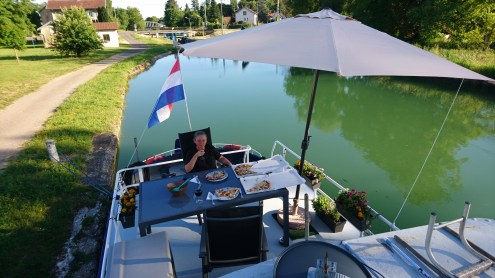
Eben Haezer has a large elevated rear deck which provides a lovely space to sit and enjoy a drink or alfresco meal, and to entertain visitors. In Schoten our good friend Roland took us to a place where we could buy luxurious thick-pile artificial grass matting at great prices. We wish we had not baulked at the idea, because it would have provided excellent cover. The deck gets quite on a hot sunny summer’s day, and the matting would have insulated the deck as well as being kind to bare feet. If we find good quality turf matting at a decent price, we will probably go that way.

Shade on the deck is provided by a large market umbrella which we inherited. It works very well but requires regular moving to match the movement of the sun and, because of its size and weight, it doesn’t tilt. We have thought about a fitted marine canopy or large bimini, but these are very expensive and, until we work out a good design, we’ll deal with what we have.

We also inherited a huge metal and glass outdoor table and four lovely outdoor chairs – large, adjustable, folding. The chairs are great but the table is just way too big. When and if we find a smaller version we like, we will swap, for sure, giving much more space on the rear deck but still allowing for eating, relaxing and entertaining.
Tales of days aboard an old boat