Mote to come
Category Archives: Uncategorized
Marvellous Montargis
More to come
Canal de Briare
The first thing we had to do in moving from the Canal Latéral à la Loire onto the Canal de Briare was to cross the Loire River itself… across the 662-metre pont-canal built in the late 19th century with input from Gustave Eiffel. Built on 14 piers, its steel beam and channel hold about 13,000 tonnes of water. It’s not scary, being fairly wide and easily navigable, but it’s an impressive crossing all the same.


Our first stop past Briare was in the charming village of Ouzouer-sur-Trézé, with a delightful halte giving easy access to the village, its boulangerie and its impressive 12th-century Église Saint-Martin with massive flying buttresses.


Our next stop was quite a contrast, being in the natural surrounds of the Étang de Gazonne, at the summit of the canal. A lovely wild mooring beside the lake, watched over by the éclusier who was clearly in love with the place and acted as a kind of park ranger. We offered to buy his place but he indicated a strong reluctance. We don’t blame him!


After the sweet natural delights of Gazonne, we headed along the canal to Rogny-les-Sept-Écluse. Apart from being a delightful stop with many lovely walks, Rogny also displays the true genius and industry behind the construction of the Canal de Briare. Its original seven locks, built in the mid-17th century, were replaced by five locks conforming to the Freycinet gauge in the late 19th-century, but the original locks are an impressive monument. Apparently they involved 12,000 workers, bolstered by 6,000 soldiers when work was halted during the Thirty Years War. They were thoroughly ground-breaking when first built, and today provide a fabulous sight and an interesting walk to the summit – where we were lucky enough to find a walnut tree in full fruit. We joined a couple of locals in plundering it for its delicious bounty.


Our next stop was one of the true gems of our canal travels. Chatillon-Coligny, a town of about 2,000, is an absolute delight, with a pleasant mooring, interesting streetfronts, an old chateau (private), the vestiges of its old defensive moat system, a lovely 15th-19th century Eglise Saint-Peter et Saint-Paul, and a sweet old 16th-century salt granary, now a private residence. The town became a centre of Huguenot activity during the Wars of Religion, and boasts a “House of Hell” (Protestant) only a few doors up from the “House of Paradise” (Catholic). Chatillon is also known as the childhood home of the famous French writer Colette, whose house still stands in the town.


The old salt granary


The sign refers to the murders of two Catholic canons by marauding Huguenots in 1562

Colettes’; childhood home
From Chatillon we travelled to the small village of Montcresson. Not much there, with a wild but pleasant mooring, although there was a lovely old 12th-century church, which apparently had a tunnel leading to the old convent (now demolished) – there are vestiges of the old vault still visible. The town is also interesting for its association with the MacMahon family, from Ireland, who came to France in the 17th century during the Glorious Revolution and who claimed descent from the kings of Ireland. Successive generations served in the French army and in 1873 Patrice de MacMahon was elected President of the French Republic, before his death in 1893 at this place.


Entry to the vault that connected the church with the convent

Statue of Patrice de MacMahon
Down the Loire
Leaving Digoin and crossing the Loire via the elevated pont-canal, we started our journey westwards down the Loire along the lateral canal that tracks the river as far as Briare. Our first stop was at Coulanges, a village without much but at least the halte had services and was very peaceful. We had both happy and sad encounters here…. we came across a wreath laid by the canal in memory of someone who had died – possibly, we thought, a drowning, given the location of the sad memorial. Our spirits were lifted soon afterwards by the sweet sounds of a lady singing French folk songs as she picked wild fruit from a tree by the canal.


We continued through a couple more pleasant days on the canal, witnessing the sacred, the profane and the quotidien. The sacred came in the form of a glimpse of the extensive complex of the Abbaye Notre Dame des Sept-Fons – a Cistercian monastery founded in 1132 that later joined to the Trappist order; it now houses around 90 monks, many of them novices from around the world. All we got to see as we passed by on the canal, in truth, was a wall and a gate – but from what we know it is a remarkable complex. The profane came very close by, in the form of a massive canalside foundry on the opposite bank. The quotidien, to our delight, was the éclusier at the last lock of the day before arriving in Beaulon, a wonderfully jovial fellow who unashamedly celebrated his love of the colour blue.


Beaulon proved to be a pleasant stopover – nice mooring with services, some interesting old homes, a chateau (privately owned, not accessible), plus the important thingsd in a small village… boulangerie, boucherie and epicerie with small café. We spent a couple of enjoyable days there, dreaming of re-opening the lovely ivy-clad restaurant that had closed down sometime earlier.


After Beaulon, we arrived in Gannay-sur-Loire, the new resting place for Eben Haezer for the three weeks we would be away visiting Jane’s family in Wales. We had originally hoped to reach the large port of Nevers for this, but a broken lock downstream forced us to choose here instead. To be honest, there was not much to Gannay; the free municipal mooring was limited to a maximum of 48 hours and the private canal-bank marina was somewhat over-priced for a place right off the beaten track with not much to offer in shopping, services or transport. Cést la vie, we made the best of it.
Although there was little in the way of shops, and we had to catch an expensive taxi to get to the rail station in Decize, Gannay was not completely devoid of charm and interest. The Romanesque church of Saint-Jean-Baptiste had unfortunately been extensively destroyed in the Revolution but had preserved its choir and stone vault and a carved statue of the Virgin. There was a very pleasant small café restaurant opposite the church, where we shared a meal with the New Zealand friends we had met in Digoin. There was an interesting relic of a linden tree in the main square by the church, originally planted in 1620 by Sully, Louis XIV’s grand voyer minister of state, part of a scheme to plant such trees in villages throughout France, to act as meeting points after Mass to discuss and manage the affairs of the parish, and to mark important road routes. This particular arbre de Sully had seen better days, having been damaged when the trailer of a lorry detached and smashed into it. The remains of its trunk have been preserved under its own little steeple. And we had a little friend visit us daily at our mooring – a coypu, a South American aquatic rodent introduced to Europe and now fairly common along the canals and rivers. We often see them swimming but this was the first time one had so fearlessly approached so close to us.


To get to Wales, we had to catch a taxi to Decize, then a train to Nevers, where we had reserved a hire car for the trip. We then left Gannay in the car on 6 August and travelled to Calais via Orléans, Chartres and Rouen, then to St Asaf via Dover and a funny little rural BnB in Huntley in Herefordshire. That trip, over three delightful weeks, is a story for another place. I returned a week before Jane to do some work on Eben Haezer before picking her up at the airport in Lyon, where she had flown from Manchester.
I was able to do some good restorative work on the boat while at Gannay, including some repairs to sections of the wheelhouse that had suffered timber rot, and a good coat of paint in various areas crying out for it. I was also able to fit new curtains to our bedroom windows which Jane’s Mum had made up for us in Wales.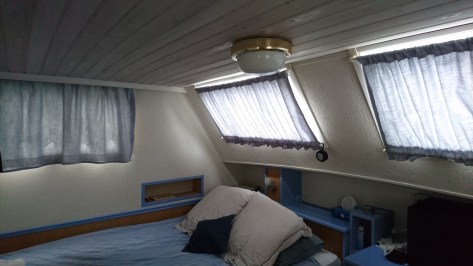
Finally, on 30 August we left Gannay to continue our cruise down the Canal Latéral à la Loire.
After a break for the éclusier’s lunch at Saulx, we made an overnight stop on the canal outside Decize, then the next day on to Fleury-sur-Loire, a small village with a simple mooring but with services (water and electricity) and a cheap and cheerful café in a couple of marquees overlooking the canal.


After a couple of enjoyable days we headed into Nevers, a large town/small city, the capital of the Nièvre department in Bourgogne-Franche-Comté. We had intended to leave our boat here for the three weeks we would be in Wales visiting Jane’s family, but a broken lock meant we had to change plans and we would now be here for only a couple of days. The port here is large and wide, but with many boats, and we found a comfortable place on the edge of the marina, giving us privacy and all services on a new long pontoon.
The city itself is quite charming, or at least the older part of it near the river. It had once been an important depot for Julius Caesar during his campaigns against the Gauls (though he suffered its sacking by the Aedui at one stage). From the 16th century it became a notable centre for the manufacture of faience (tin-glazed earthenware pottery). This heritage is reflected in two museums dedicated to faience, one of which was unfortunately closed when we were there, and another in the former Ducal Palace – the day we were there the Palace exhibits featured not only pottery and glazed works but a fascinating collection of cardboard sculptures of fantastic creatures. We also discovered the HQ of the Montagnon firm of faience manufacturers, which traces its origins to 1648 but which regrettably closed its doors permanently in 2015.


The narrow streets that lead away from the river are interesting, with many houses from the 14th to the 17th centuries. The Romanesque/Gothic Nevers cathedral (Cathédrale Saint-Cyr-Saint-Julitte) was imposing, as was the Romanesque Église Saint-Étienne, as well as the Ducal Palace and its adjacent Place de la République. We also enjoyed a ride through the Parc Roger Salengro to the Chapel of Saint Bernadette Soubirous, the witness to the apparitions of Our Lady of Lourdes in the 19th-century, who died in Nevers and whose “incorrupt body” remains on display. We chose not to view the corpse, but were delighted to find a large mosaic mural under construction in the adjacent courtyard.


Leaving Nevers we cruised to the little village of Cours-les-Barres, a pleasant stop but a place where it seems they have been somewhat opposed to beggars for a long time…


Our cruise from Cours-les-Barres included some lovely locks, well tended with flowers and attentive éclusiers – even when on the phone, as they always were.


Our next stop, la Chapelle-Montlinard proved to be a fascinating place. The mooring, by an industrial site, was less than salubrious, though adequate.
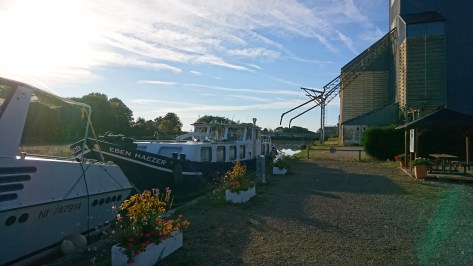
But the nearby town of La Charité-sur-Loire was something else altogether. Across the Loire from the canal mooring and up a slight rise, la Charité had some lovely surprises. The Église Notre-Dame de la Charité-sur-Loire is a magnificent ruin, largely preserved. With a history going back to the 8th century, and the current building dating from the 12th to 14th centuries, it is a marvel of ecclesiastical architecture, one of the foremost “daughters” of the famous Cluny Abbey. Its survival is even more remarkable, given it was marked for destruction in the Revolution and was turned into a series of trade enterprises – a pottery, a shoe manufacturer, a wine store – and then was earmarked for demolition in the 19th century to make way for the Paris-Nevers road (thankfully avoided). It has lost its western chapels and one of its towers, and its walls are green with mould, but it is superb.


For the last thirteen years, la Charité has been hosting an annual Festival du Mot, a literary festival, welcoming poets, writers, critics and the public to celebrate words (rather than just books), with each year dedicated to a particular word. The town has turned itself over to this, with numerous inscriptions and placards throughout town, on steps, walls, roadways and shopfronts.


Another highlight in la Charite was the les halles de loire, an unusual grocery/vegetable store by the river, established in an old abattoir that closed in 1984 and has been turned into a store specialising in local produce, fresh and preserved. It’s a interesting and atmospheric space (even the old rails and hooks for the carcasses have been maintained) and its products are genuinely good, local and sourced. There aren’t many spaces like this in France, and we were delighted to find it.


After la Charité we cruised to Ménétréol, the chief attraction of which was its proximity to the hilltop village of Sancerre, a lovely town and the centre of a noted wine region. It was a nice mooring, but as we approached a lady appeared on the quay, gesticulating and telling us we could not moor there because a large boat was due to arrive. We told her we had arrived and we were staying, and she disappeared. To our horror, we later discovered she was the proprietor of the dockside restaurant we had booked dinner at that evening! All the same, she was friendly and didn’t seem to mind, and the large boat didn’t arrive, so pas de problème. The restaurant was lovely… and clearly obsessed with hats!


The following day, however, the large boat did arrive. It was a hotel boat, and it was arrogant and aggressive. Our first inkling was when a young man pulled up to the port in a van and told us we had to move to make room. He did the same to the boat in front of us. That was when we first met John and Janet Hughes, from Sydney but now of the Gold Coast, fellow Australians who proved they don’t take shit. Tbe hotel boat arrived shortly afterwards and hovered beside us, the crew member yelling at us to move. John, a lawyer and immovable object, simply refused. He winked at me and continued his charade of non-cooperation for a while, insisting that the boat and its crew show a bit more respect and consideration. Eventually, however, we agreed to provide room for the hotel boat and its guests…. it meant we had to move as far back as possible and hammer in our ground stakes, but we were OK.


All that out of the way, we were free to ride our bikes up the hill to Sancerre, to take in the town and its views and its wine shops. It was a challenging ride up the hill but well worth it – the town is a delight, with a lovely square where we enjoyed lunch, great views and a series of narrow streets leading to our target… the Domaine Vacheron et Fils. We enjoyed a lovely tasting in their cave and ordered a couple of dozen bottles, which M. Vacheron undertook to deliver to us at the boat the following morning.


With the Sancerre wine delivered as promised and safely stowed, we set off for the tiny village of Léré, 18 kilometres further down the canal. We arrived at a peaceful setting with only one or two other boats. But lo and behold, events repeated themselves when a hotel boat arrived and rudely requested we shift our settled positions; once again, there had been no sign or warning of their arrival (some other hotel boats are considerate enough to leave notices at moorings to warn of their arrival, by date and ETA). This time it was the turn of the Englishman in front of us to play the role that our friend John had performed in Ménétréol, feigning offence and inconvenience and non-cooperation, until we eventually, reluctantly shifted our boats to make room. Such an unnecessary rigmarole! There was not much to the village, apart from an attractive small lavoir (communal wash house), a nice restaurant (which we did not visit on this occasion), a boulangerie, and the handsome 14th-century Église Saint-Martin.


Our next stop was at the attractive halte at Beaulieu, only a couple of hours further down the canal. On the way we could see in the distance the cooling towers of the Belleville nuclear power plant. Beaulieu is in a nice setting, with power and water, and the village is a delightful little place, with a boulangerie, a pleasant bar-tabac and the sweetest, smallest mairie we have seen. Unfortunately the boulangerie was closed for the annual summer holidays…. we were pretty sure what he would be up to – the photos and trophies in his window were not for achievement in bread-making but for catching fish!


From Beaulieu we headed towards Briare, our last stop on the Canal before turning north. Briare sits at the junction of the Loire River and its latéral canal, and the Canal du Briare. The Loire canal crosses the river just before the town along an elevated pont-canal, and we decided to stop just before it at a wild mooring, rightly suspecting that there might not be a suitable place for us in the town marinas. It was an easy cycle into town and it was peaceful and free! The pont-canal itself is a wonder – for a hundred years until 2003 it was the longest iron aqueduct in the world, at 662 metres, and it has a strong connection with Gustave Eiffel of Tower fame. It provides a great view of the river as you cross it.


Briare is an interesting an pleasant town, with an excellent marina (though with high demand and therefore limited space). The town has some excellent cafés and restaurants, some lovely walks along the riverside, a lot of waterways and waterside parks to walk through and a general air of ease and relaxation. One of our prime interests was the Musée de la Mosaique et des Emaux, dedicated to the mosaic and enamel industries that flourished here in the 19th and early 20th centuries. The Emaux de Briare company manufactured and exported millions of enamel buttons and beads, and pioneered the production of pre-cut mosaic tiles which were used to adorn buildings and to tile bathrooms and kitchens. Within the museum there is still today a factory which sells tiles, mosaic pieces, fixatives and glazes.


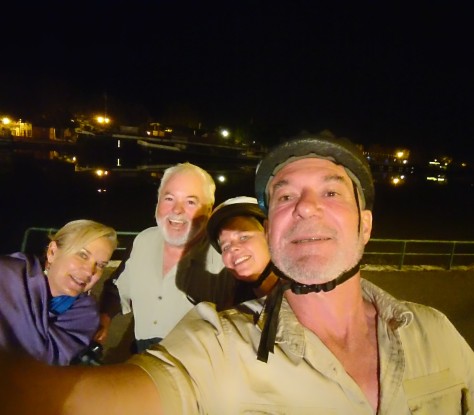
We were only in Briare for a short time, but we were fortunate to reconnect with our Australian friends John and Janet Hughes and to enjoy a lovely meal with them at the Restaurant Le Pont Canal, right by the aqueduct over the river. The meal was fantastic, made even better by John insisting on paying for us. Really lovely folk! The evening was perhaps a bit too enjoyable, judging by the selfie we took at the end of it.
So came the end of our cruise down the Canal Lateral a la Loire; our next stage would be a northward journey along the Canal de Briare and Canal du Loing back towards the Seine. Before we could get away, however, we had to navigate the pont-canal across the river…. a slow but relatively straightforward manoeuvre, but exhilirating in its own small way.
Into Champagne
After the rigours of the transition from the Seine to the Marne were soothed away by our pleasant stay in Lagny, we continued up the river towards our rendezvous with a bit of bubbly. Our next stop was in the town of Meaux, still only 50 kilometres from Paris, at the end of a slow, relaxing cruise upstream along the meandering Marne. We arrived as the only boat in the port, and it was clear why: the mooring pontoons were undergoing major repairs after the January floods and the gangways from the pontoons to the shore had been removed! No problem – we pulled out our DIY passarelle and voilà, connection made. Power and water, no mooring fee, and a lovely city to explore.


Meaux is most famous for its variety of brie… which is truly delicious…. and also for its mustard, one of the great alternatives to Dijon. It is full of beguiling, narrow streets, many of which have been pedestrianised, hosting all the major brands, plus lots of boulangeries, patisseries, chocolateries, epiceries and restaurants and cafes. On our first evening we stuffed ourselves silly with a magnificent meal at the Chinese resto just across from our mooring.


The city is dominated by its Gothic Cathédrale Saint-Etienne and the episcopal palace and gardens behind it. It was interesting to see all the statues of saints and angels, decapitated during the French Revolution. Apart from the magnificent 17-century organ, the cathedral is best known for its association with Bossuet, bishop of Meaux 1681-1704, known as l’aigle de Meaux and reputedly one of history’s greatest orators and rhetoricians .


After a couple of days in Meaux, a delightful morning cruise up the river brought us to a very different place, the small village of Mary. Nothing much there, except calm, peace and an excellent restaurant, the Quai des Brumes, right by the mooring.


Another easy meandering morning cruise delivered us to La Ferté-sous-Jouarre, where we moored in a lovely secluded channel behind an island in the river. It was peaceful, but sobering to see the markers on the pontoon pylons showing how high the water had been during the floods of February – only 4 months previous!


La Ferté boasted a fine Hotel de Ville and, even better, a café that made excellent coffee using beans roasted on site – a rare find anywhere in France, in our experience.


We gave our new electric bikes their first real workout with a 3km uphill ride to the Abbaye Notre Dame de Jouarre. The abbey was first established by Saint Columban in the 7th century, then devastated and rebuilt in the 11th century, again during the Hundred Years War, and yet again in the Revolution. Today it hosts a community of 33 Benedictine nuns; the church is a suitably austere affair, without ornamentation, and the whole place and its gentle sisters give off an air of calm, serene contemplation, but not removed from the outside world. When not engaged in prayer and contemplation and good works, the sisters seem to be well occupied in producing rather kitsch pieces of ceramic figurines of children and saints.


As we moved on up the river from La Ferté, the hills on either side of the canal gradually gave more evidence that we were moving deeper into Champagne, with vineyards shyly revealing themselves then combining into vistas of vines stretching into the distance on both sides. We pulled into the town of Château-Thierry after a long day, having decided not to stop at Nanteuil or Nogent d’Artaud further downstream.
Château-Thierry is a sweet town with a handsome Hotel de Ville, a distinctive art déco cinema and a fascinating ruined château of the 12th/16th centuries. It was also the home of the 17-century fabulist storyteller, Jean de la Fontaine whose most popular and best-loved tale of the grasshopper and the ant (la cigale et la fourmi) is celebrated with whimsical statues about town.


Especially in this Centenary year of the Second Battle of the Marne, reminders of WWI were never far away in Château-Thierry, from the American monument on Hill 204 above the town, to a small ceremony of remembrance one afternoon at the Jean Moulin Resistance memorial just by our boat.


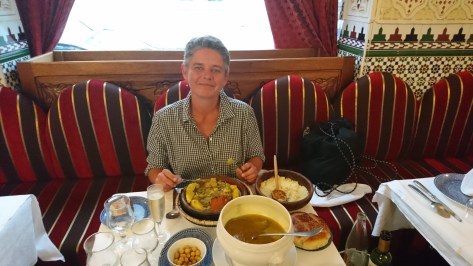
Château-Thierry also offers a couple of lovely restaurants; we chose the Moroccan Palais de Marrakech in the town square and were not disappointed!
After a thoroughly enjoyable couple of days we set off for our next stop, the town of Dormans. By this time we were really in the thick of Champagne country. We postponed our thirst, though, and took a visit to the lovely old 14th-century Château de Dormans and its delightful gardens, and the adjacent Great War Memorial built on the orders of Maréchal Foch to commemorate the victories in the battles of the Marne. Impressive, sombre, but a little too glorious, we thought…. It was refreshing to come back down the hill and see some locals playing pétanque in the grounds of the château.


The next day we pulled out our bikes and went for a delightful cycle along the banks of the Marne, to the villages of Verneuil and Vincelles. We came across Champagne Jacques Copin and managed to score a tasting and a bottle of their Polyphénoles 2006, a fabulous drop from a very good year. The deep red roses around Verneuil’s little 12th-century church were stunning!


In Dormans we enjoyed two other delights, both surprises and both unplanned. The first was when I got a flat tyre on my bike when we were visiting the château, which meant walking the bike back to the village… where we found a bicycle and lawnmower service shop in the centre of town, 5 minutes before closing. The lovely man let me in, threw my bike on his repair cradle, and replaced the inner tube in about 3 minutes, then refused to charge me more than the cost of the tube itself.
The second delight was out discovery of the restaurant Sylvain Suty, where we had a magnificent four-course meal for a bargain price, complete with the most extravagant cheese chariot and dessert chariot.


The next day’s cruise was delightful, and the mooring we found at Damery was fantastic. The village is crawling with champagne houses! We picked out J. de Telmont and were treated to a wonderful tasting by Lucille, our knowledgeable and friendly hostess. We scored a 2006 vintage and an excellent ratafia, which we enjoyed from our rear deck as we took in the magical slow dying of the light across the river.


The following day we cycled along the river from Damery to Cumières, then up the hill to Hautvillers, which styles itself as the berceaux, or cradle, of Champagne, because of Dom Perignon who lived and worked at the village’s Abbaye de Saint-Pierre in the late 17th century. In fact, he was not responsible for discovering or developing Champagne, despite claims by many, including the well-known Champagne house of Moët et Chandon, which now owns the Abbaye (closed to the public but undergoing expensive renovations) as well as extensive vineyards in the surrounding hills. It’s quite a touristy town, but still attractive, with fabulous views back down to the Marne River.


On our way back to the boat we met a man in Cumières who gave us a bag of fresh cherries and introduced us to his extensive collection of geraniums, including one whose leaves he claimed were an excellent mosquito repellent. We enjoyed lunch at a lovely little cafe, run by an old couple with serious mobility issues. Essentially, you ordered your meal and collected each of the three courses from a laminate-top table, ladling the stew course into your bowl and collecting a thick cut of bread to go with it, then returning for cheese and/or pudding which you selected from the table and served onto your own plate. La Paillotte (The Hut) has adopted the motto à la bonne franquette, which basically means “homely and unpretentious”. The steady stream of cyclists who stopped in seemed to agree, and the river views and ambience were priceless.


We cruised up the river to Mareuil-sur-Ay, where we had decided to base ourselves rather than in the centre of Épernay (the self-proclaimed capitale de Champagne), whose port seemed a bit pokey and outrageously expensive. We were unable to connect to the services at Mareuil, but never mind, it was a pleasant stop and the village was filled with champagne houses, while Épernay was an easy, level 7km ride away.
Our first stop in Épernay was the Avenue de Champagne, where the major houses have their HQs. They date mostly from the mid-late 19th century; it’s a bit like what I imagine LA aimed for with Rodeo Drive, but with class and history. Surprisingly, with the exception of Moët et Chandon, it was not at all touristy.

Hotel de Ville, Epernay

Ugly modern section of Moet et Chandon

Hotel Moet

Maison Collard-Picard

Pol Roger

chmpagne des Venoges

Maison Boizel
Returning from Épernay to our mooring at Mareuil-sur-Ay, we had hoped for a tasting at Billecart-Salmon, a small-medium house that in 1999 earned the accolade of “champagne of the millenium” for its 1959 vintage… alas, they only receive visitors by prior appointment. Our consolation was a visit to the House of Bénard Roland, where the owner Philippe Bénard (fourth-generation champagne producer), cigar permanently planted, greeted us with a fine and generous degustation. Really good champagne at bargain prices. The portraits of his family on the walls were a nice touch.


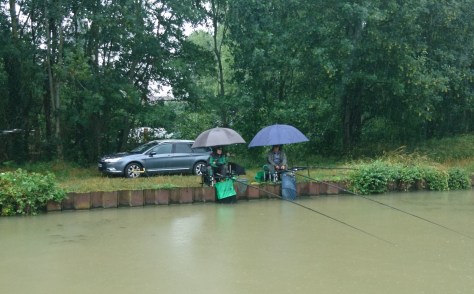
The next day was wet and rainy.. not that it deterred the ubiquitous French anglers. I reckon most Frenchmen would fish in a puddle… after all, they’ve spent a fortune on equipment!
After a long wet day we arrived in Châlons-en-Champagne, scoring the last available place at the port. we had not expected much of Châlons, the last outpost of the champagne-producing region, but we were pleasantly surprised. A fine cathedral and church, some lovely 16th-century half-timbered houses and handsome 17th-century stone residences, a nice square and a couple of lovely parks, and an excellent marché couvert made us wish we were able to spend longer here, and vowing to return as soon as we can.


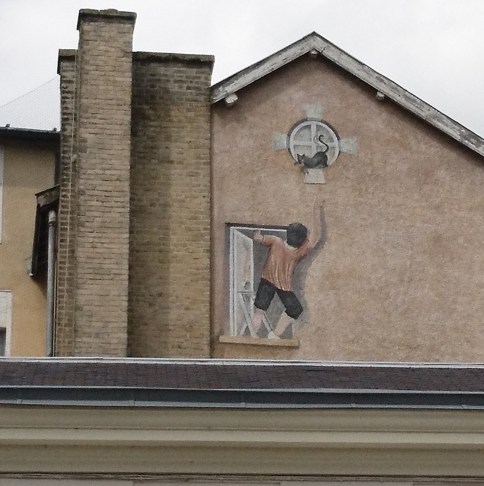
Châlons-en-Champagne is the birthplace of humourist-satirist Pierre Dac (aka André Isaac), best-known as the inventor/creator of the “schmilblick”, an imaginary and utterly useless object which can be used for anything, being ‘rigorously entire’. It became popular in the French vernacular, and “pushing the schmilblick” (faire avancer le schmilblick) now means ‘providing a small amount of help to a large problem’. It appears Châlons has inherited some of Dac’s sense of humour….
Everywhere we travel in France, we witness examples of the devastation wreaked by the Revolution….. closed and ruined churches and abbeys, defaced and decapitated statues, destruction of places and objects from hundreds of years before. In Châlons-en-Champagne we saw an example of the Church doing that work itself, 30 years before the Reign of Terror and the Committee of Public Safety. The Cloister of Notre-Dame-en-Vaux, built in 1170-1180, was demolished in 1759 by the canons of the church to provide building materials for their row of houses. The Museum and Garden on the site, excavated and created in the 1970s, provide a fascinating insight into what was lost for the priests’ comfort.


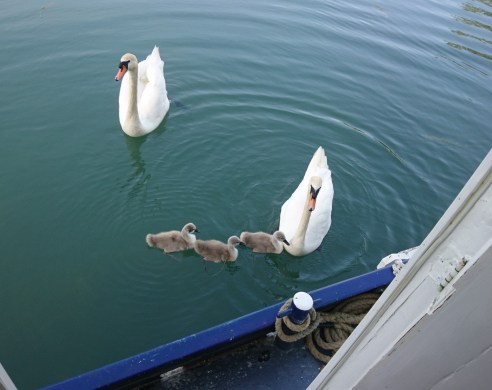
On the morning of our departure from Châlons-en-Champagne, a family visited to bid us farewell from the land of Champagne. And maybe to join us for breakfast.
Towards Paris
Now that we’d settled a few important things – our winter port, the paperwork for my long stay visa, a bit of maintenance – we could depart Saint-Florentin in a refreshed, relaxed state of mind, knowing we were under no pressure and that we could just cruise and enjoy ourselves. A week to Paris, a fortnight or more there, then a week back to Saint-Florentin. Bliss!
It was just as well we were feeling relaxed. We had advised the VNF that we would be leaving at 9.00am for the first lock on the edge of the port, but they obviously forgot and didn’t turn up until an hour later. Never mind… we had a pleasant cruise on a sunny day. We kept going past Brienon-sur-Armançon, which we were not particularly impressed by – lots of dirty old boats stacked up nearly on top of each other – and kept going another couple of hours to Migennes, the wide basin at the very end of the Canal de Boourgnon. Migennes has a long quay with services as well as a Le Boat hire boat base. As it turned out, it was smelly and noisy (major rail station opposite) and were not particularly impressed… we wondered why many people decided to winter their boats there. But it was handy, and we managed a decent pizza for dinner from the nearby hole-in-the-wall Pizza Mania.
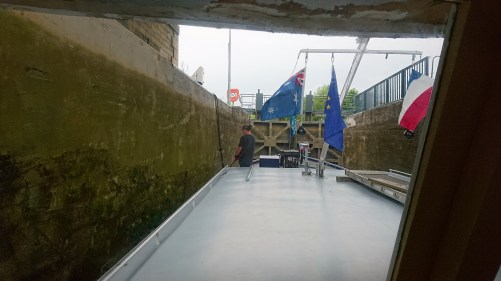
The following day we set off through the last lock on the Canal de Bourgogne, lowering us down onto the Yonne River. Since leaving the Sâone about two months before, we had gone through 189 locks in 22 days of travel, or just under 9 locks in 12 kilometres for the average cruising day. We did a little fist-pump as we floated onto the wide expanse of the river. We would still have a few locks – but they would now be large and wide, as the river ran over weirs and barrages as it wound its way downhill towards the Seine. We could also let the engine out and travel, with the current, at about 12-15kph instead of the maximum 6kph we enjoyed on the canal. Zoom zoom!
It wasn’t all racetrack, though. We still had to pause for lunch inside Lock 4 at Villevallier, since for us the locks did not work through lunchtime, and there were no commercial craft to piggyback on. All the same, we pulled into Villeneuve in good time mid-afternoon, having travelled an amazing 28 kilometres through 6 locks!


The following day we set off originally planning to cruise a similar distance, to Pont sur Yonne but, when we arrived in Sens, there was good space at the quay, the town looked inviting, so we decided to check the place out. We were glad we did… Sens is delightful.
On the way, we came across a new kind of lock at Rosoy, peculiar to the Yonne, with sloping sides. There was a floating pontoon to tie up to, however, so it was no trouble. There are apparently a few of these further downstream, however, without the pontoon, so we weren’t sure how we’d go with those.
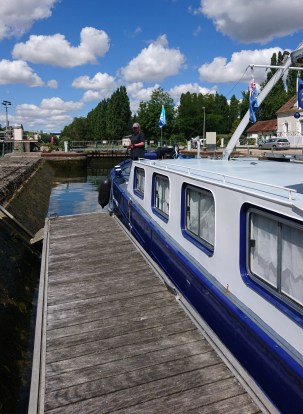
Sens proved to be wonderful, with an excellent stone quay with services (although water access was eccentric and some power points were disabled because of recent floods). The town is charming, with a wonderful historic church (for centuries it was superior in the church hierarchy to Paris) and a fantastic covered market hall, which we managed to visit before departing the nest morning – a triumph of art deco ironwork and stained glass, with a marvellous array of vendors inside.


After leaving Sens we had a short hop to Pont sur Yonne, where we moored on modern pontoons without services, before travelling to Montereau-fault-Yonne, the confluence of the Yonne and the Seine. At that time the mooring at Montereau was pleasant and efficient (it has changed since, we can assure you!) and we enjoyed a delightful dinner of moules et frites (mussels and fries) at a little restaurant overlooking the river confluence.


Now we travelled on the Seine, heading towards Paris. It is a big river, but not yet wide enough to mitigate wash, with plentiful commercial traffic. It has to be said, though, that the large locks, of which there were only a few, were easy to navigate. We stopped overnight at Melun, where we felt constantly the weaves and wash and flow of big boats as they passed. Convenient but not delightful.


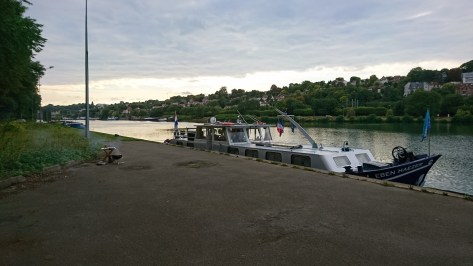
Our final stop before Paris was at the quai dáttente immediately before Lock 7 on the Seine. It was a somewhat desolate but nevertheless pleasant stopover, without services, but lightened with a delicious barbecue dinner we cooked for ourselves, before the final day’s journey into Paris.
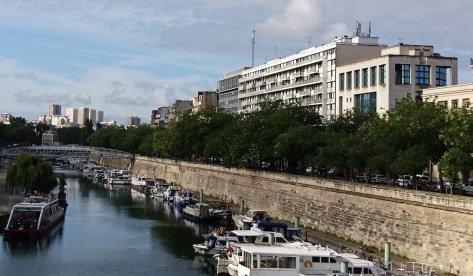
And so it was, that on 12 August 2017 we found ourselves cruising the Seine into the centre of Paris. It was a far from relaxed experience, with a multitude of commercial and tourist boats bobbing up and down and speeding along the river, which was choppy and sloshy with all the traffic as we waited for the go-ahead to enter the lock into the Arsenal boat basin, but we had arrived. We were in the City of Light.
Start of our second season
After a pleasant couple of weeks in our winter port of Épinal, the French autumn sun rose on 18 May 2017 and we cast off to begin our second season of barging. Our first day saw us busy with 15 locks up the higher part of the Canal des Vosges, but we consoled ourselves with the thought that we had reserved a table at a very nice restaurant for our first evening on the water.
We had hoped to pull up to a small mooring in the village of Chamousey where the restaurant was located, but we found we had been beaten to it by an English couple on their narrowboat, so we continued upstream one more lock and a few kilometres to Trusey. No matter, we thought; we donned our evening wear, mounted our bicycles and trundled off in the direction of Le Clamosien, our destination for dinner. I thought I was very clever, having put the coordinates into my smartphone and let Google Navigation find the shortest route. The shortest route it was, but it turned quickly from a formed road into a barely discernible track through a paddock, then a deep muddy track through a dark forest.
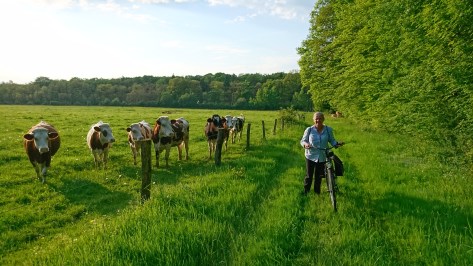
We eventually made it to the restaurant, having managed to keep the mud from rising and splashing higher than mid-calf. Ah well, at least we were in a fine space with the prospect of fine food. And we were not disappointed: the service was fantastic, the food was magnificent.


Our lovely waiter even ventured out in the developing rain after dinner to show us a shortcut back to the canal towpath, a much better option for cycling back to the boat. It was a brisk ride through howling winds and driving rain, with lightning and thunder exploding all around us. We arrived back on board, our first night out of port, soaked and giggling with embarrassed, well-fed delight. The meal kept us in a great mood through the following day, as it bucketed down with unrelenting rain, keeping us inside as we decided to delay our next stage of the journey until it cleared.
 Scraping Through France