Category Archives: Practicalities

Our Third Season

After a delightful southern summer in Australia, we returned to France in April 2018 to start our third season of cruising through France on Eben Haezer. We arrived in Paris to rain and a rail strike, so we delayed our travel to Saint-Florentin by a day and stayed overnight at a lovely little hotel at the airport, the Citizen M. On April 10 we made our connections from Charles de Gaulle to Paris-Bercy and caught the train to Vergigny, where we were met  at the station by the port capitain Vincent. It was wonderful to get back on  board and to reconnect with friends – our lovely group of local residents, as well as our Welsh friends Terry and Linda, on their new boat.

We were so pleased to be back on board and planning our longest season so far. We had plotted a circular route that would take us up the Marne River into the Champagne region, then south towards the Sâone River, before heading eastwards along the Canal du Centre and down the Loire Valley, heading north again up the Canal de Briare and the Canal du Loing, then returning along the Yonne to winter once more at Saint-Florentin.

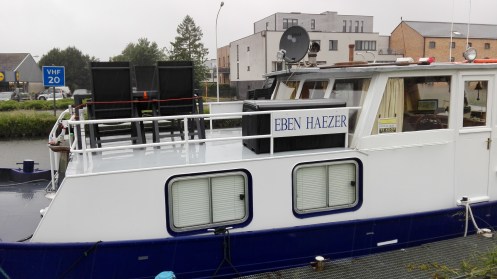
Unfortunately, we found Eben Haezer in a state that required a significant delay to our plans. Weather and time had taken their toll on her condition; the decks were all filthy and stained from leaves and twigs that had fallen during the autumn and winter, and there were areas where the paint was old and dangerously smooth and slippery, or where small pockets of rust needed treatment. More seriously, we found that sections of the wooden wheelhouse had suffered water damage from rain and snow… not only were there sections of major timber rot but gaps had opened to allow more water to invade. Urgent repairs were called for. So we motored a few hundred metres along the canal to the chantier workshop, moored up and got things ready for scraping and painting, as well as engaging professional help from Nicolas at the chantier to effect the repairs to the wheelhouse. We were to stay here for the next month.

2018-04-20 13.13.48

As we worked away on painting the decks – when wind and falling blossoms, or else rain, didn’t slow us down – Nicolas got to work repairing the woodwork in the wheelhouse. The more we peeled back and removed, the more serious it seemed, and all Nicolas’ skills in filling and packing and cutting in new sections of timber were called into play (he even called in another specialist to cut certain sections to size using off-cuts from his personal collection of fine timbers). Then, of course, extra work developed, when for example the big window panes that needed to be removed to allow repairs to the timber were accidentally cracked and needed replacement. It’s only time and money! At least we were able to replace the windows with a heavier gauge glass, so I suppose there was a bright side.

We were absolutely delighted, though, with the job that Nicolas did, and the repaired sections of the wheelhouse looked as good as we had ever seen them. We also were able to congratulate ourselves on the job we did in repainting the decks and the wheelhouse roof; Eben Haezer was starting to shine again. We scraped back dozens of small areas of rust or exposed steel, patched them with undercoat and used a non-slip paint on the decks, and the results were very pleasing.

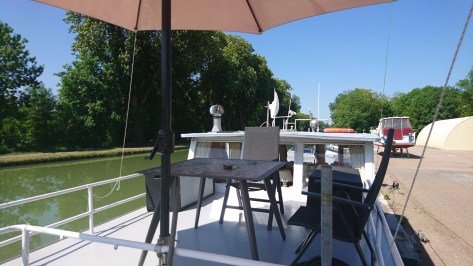
We also managed to offload some unwanted furniture and bought a smart new stone-topped table for our rear entertaining deck. Very schmick!

2018-05-08 11.43.54

We did some other repairs and upgrades, including replacing an aerial for our AIS navigation transponder, and some work on our electrics – installing some lovely big new solar panels and with a smart solar inverter from Victron, as well as finally reconnecting our house battery and engine battery banks with a smart isolator (Victron again).

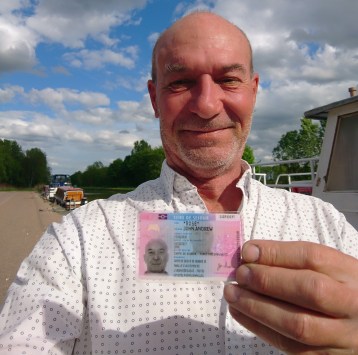
The time we spent in dock for repairs was also used (and needed) for the process of finally securing my carte de séjours, or long-stay visa, from the prefecture in Auxerre. I had been issued with a temporary one before we left France the year before, and it now required only three more visits (naturellement) to be issued with the shiny new laminated card that allowed me to stay in France for 12 months… well, actually only 6 months, since my original application had been submitted the previous October.

2018-04-27 17.36.08

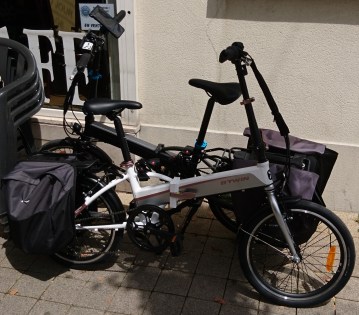
We took the plunge on new bicycles as well… we bought electric bikes from the Decathlon chain of sports stores, figuring they would help us get further, quicker when we wanted to cycle to towns or sites further away from our moorings along the canal or up hills that might have pout us off if we had to rely on our trusty old manual bikes.

2018-06-03 13.21.30

Our extended time in the port at Saint-Florentin stretched out to nearly 6 weeks, putting a serious dent in our plans for a leisurely circle route for the 2018 season. It did, however, also allow us the luxury of spending time with friends we had made and whom we might not see again for a while. We enjoyed more than one sociable al fresco dinner party or BBQ in the port’s little park, and we were also able to host our generous English friends John and Sue for dinner, for their company but also to thank them for all the assistance they had given us during our sojourn. They had driven us several times the 30 or 40 kilometres to Auxerre for official business or shopping for equipment – on the condition that they could visit a big-box shop or, more importantly, enjoy lunch at their favourite Auxerre bistro. We were delighted to share a meal on board with them shortly before we left.

Finally the time came when the major tasks were done and the itch to get moving needed to be scratched. We could almost feel Eben Haezer willing us to get moving, and our resident heron waited impatiently to guide us along the canal. On May 22 we finally set off towards the Yonne and the Seine and our 2018 aventures fluviales.

Summary of our second season

We started our second season in Épinal in the Vosges Department of the Grand Est Region and ended it in Saint-Florentin in the Yonne Department of the Bourgogne-Franche-Comté Region. We arrived in Épinal in late April our cruise lasted from May 18 until September 12; we left Saint-Florentin and returned to Australia on 23 September.

We travelled on the following waterways:

  • Canal des Vosges
  • Las Petite Sâone (La Sâone Haute)
  • La Sâone Basse
  • Canal de Bourgogne
  • La Yonne
  • La Seine
  • Distance covered – 882 kilometres
  • Locks – 330
  • Tunnels – 2
  • Days of travel – 49
  • Days of rest – 79
  • Average hours on travel days – 4.33
  • Average daily distance – 18.0
  • Average speed – 4.2 kilometres per hour
  • Fuel consumption – 720 litres @ 3.4 litres per hour
  • Cost of fuel – total €1100 @ €1.48/litre (inc. delivery)
  • Cost of mooring at Épinal (19 days) – €5 per day, including water and electricity plus wintering for 4 months @ €3 per day (no facilities)
  • Cost of mooring while cruising (128 days) – varied from free (with or without facilities) to €62 per day, including water and electricity
  • Total cost of mooring – €520 @ €5 per day plus €1364 @ €62 per day in Paris
  • Cost of winter mooring 2017/2018 (without facilities) – €120 per month, payable in advance October-December, remainder on return
  • Cost of meals eaten at cafes and restaurants – €12-€40 per head (exc. drinks)
  • Estimated cost of meals for two people, eating out 4-5 times/week – €2800 @ €155/week
  • Estimated cost of wine and other drinks – €900  @ €50/week)
  • Estimated cost of groceries – €1800 @ €100/week
  • Total cost of mooring, fuel, food and drink – €7800 @ €1730/month
  • Cost of maintenance, repairs spares and upgrades – €500

includes oil for transmission and engine + small electric oil pump; paint and painting equipment; hand tools and small electrical tools

  • Marine insurance – €900
  • Cost of household items and upgrades – €300

includes rugs, shelving, manchester, decor, plants, other sundry items

Of chateaus and wine

The next leg of our journey would see us leaving the Cote d’ Or region of Bourgogne and entering the Department of the Yonne. The middle of July saw the sunflowers in France in full bloom and, as we cruised along the canal, we were treated to views of brilliant golden fields.

We had more mundane issues when we pulled into our next mooring at Ravières. As we completed our engine checks, we noticed that the transmission case had leaked a significant amount of oil into the collection box underneath, just above the bilge. This prompted me to check the automatic greasers along the propellor shaft, of which there were three. They were marvellous little gas-driven injectors, of the “set-and-forget” type. And I had forgotten. I normally changed them at the beginning of the season but they had plenty of grease left when we left Èpinal so I had left them in place. A bit too long. Now, with the extra effort of pulling through weed, the shaft had worked too hard and overheated the transmission, which had then ejected a far bit of oil. No damage, but an immediate need to replace the lost oil. Out here, in the middle of nowhere. After checking my online maps I located an agricultural machinery service place a couple of kilometres away, so I set off to cycle there, fingers crossed. Fortunately, I was able to buy some oil rated for large tractor transmissions, and I felt this would probably see us through until we could find somewhere with the real stuff. I kicked myself, then counted my blessings.

These mechanical tasks meant we missed the marvellous stained-glass windows in the 12th/15th-century church of Saint-Panteléon in Ravières, but not too much else in this small but attractive village. Like so many similar villages in France, it lost population continuously over the course of the 20th century, and today has only about half the number of inhabitants it boasted in 1910. Still, it has a boulangerie, a small supermarket, schools, a post office, a retirement home and a stone quarry. It persists.

Keeping a close watch on our gauges to make sure our transmission was OK, the next day we cruised three hours to Ancy-le-Franc, where we spent a couple of days. First order of business was the renowned Château d’Ancy-le-Franc. This 16th-century Renaissance marvel was designed by the Italian Sebastian Serlio with interiors by Francesco Primaticcio, both of whom worked at Fontaineblau. Its lofty ambitions were later continued by the work of landscape architect Andre le Nôtre, famed for his work at Versailles. The most notable features, however, are the amazing interiors, murals, motifs, trompe l’oeil and glazed tiles on every surface.

It was almost a relief to escape all this richness for a light lunch at the modest Bar du Chateau in town, before heading out on a bike ride to the nearby village of Chassignelles, for a look at the extraordinary Église Saint-Jean-Baptiste. This smallish 12th-century Romanesque church sits lonely on a hill above the village. With a roof of flat stones, its interior is a wonder of 12th and 13th century murals and paintings. On a very hot and windy day, we waited in the cool of its portico for the man to come and open the church for a couple of hours; he was a very keen and talkative guide and commentator and we even managed to understand some of what he said!

Back in Ancy, just by the Chãteau, we came across a 19th-century communal wash house, or lavoir, another of these facilities that dot the towns and villages of rural France.

Another nine locks down the Canal de Bourgogne (including one in which we stopped for the lock-keeper’s lunch break) brought us to the village of Tanlay. Another pleasant mooring in a wide basin, with a top little café/restaurant right by the quay, where we joined an extended family of English boaters for an excellent dinner of buckwheat galettes.

Tanlay’s claim to fame is another 16th-century Renaissance château, built around the same time as the château we visited in Ancy-le-Franc, but in different circumstances, this time by a leader of the Protestant Huguenot faction, Francois de Coligny dÁndelot. His death during the Wars of Religion meant the castle remained unfinished, until the work of its new owner Michel Particelli d’Hemery in the 17th century. It then passed to Jean Thevenin when he was created Marquis de Tanlay in 1705 and has been in the same family ever since. We especially liked the trompe-l’oeil work in the main gallery, and the frescoes in the original Tour de Ligue, where the Huguenot rebels met in secret… as well as the massive stables complex and the nymphaeum at the end of the “Grand Canal” within the grounds, separating the chateau from the neighbouring golf course.

We were looking forward to our next stop, at Tonnerre…. because we knew there were a number of interesting sites in the town itself, but also because it was where we would take a side trip to the wine village of Chablis. We didn’t know how we would do that yet, just that it was obligatoire. An easy morning cruise through six locks brought us to the mooring basin at Tonnerre; we spent the afternoon catching up on paperwork, researching our visit to Chablis and catching up with a New Zealand couple and their friends with whom we had played canal leapfrog since we had first met them back in Pont Royal. Part of our research and socialising revealed that we could catch a bus to Chablis the next day for the princely sum of €2 and return later in the afternoon for the same price via the Mobigo regional service. Problem solved; we rang the number, reserved our seats and planned to gather with our NZ friends at the SNCF car park at a bit after midday, trolley bags at the ready.

On the morning of our trip to Chablis we squeezed in a trip to the small but excellent covered market (marché couvert) in Tonnerre for provisions.

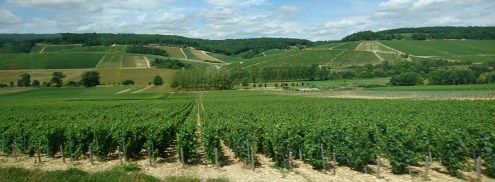
A 40-minute ride through picturesque wine country brought us into central Chablis, home to some of the world’s best Chardonnay and a miracle of recovery from the phylloxera decimation of the late-19th century and a slow decline up until the 1950s. The village itself is an attractive collection of old buildings, narrow alleyways, shops and winesellers, and we had a pleasant walk down the main street, to an old riverside lavoir and back to catch some sustenance before our tastings.

vineyards-nr-chablis2.jpg

We bypassed the Domaine de la Moutonne… it looked closed and, with mainly grand cru wines, it was beyond our range in any case!

Our target was La Chablisienne, a co-operative of growers and winemakers formed in 1923 housing a great representation of Chablis wines at various levels of quality, complexity and price. The tasting started well, with a couple of excellent wines, but it really got interesting when our NZ friends let it drop that they had owned a South Island winery some years before. When our host asked for the winery’s name, the answer produced a gasp and wide-eyed smile; she disappeared momentarily and came back with a couple of bottles… from that very winery! I’m not sure but I think this connection resulted in us tasting at least 7 different wines (a casual tasting usually gets only 3) as our host strove to introduce us to her range. Jane and I left with several cases stowed in our trolley bag, including Chablis “Les Vénérables”, Premier Cru “Les Lys” and a single Grand Cru “Les Clos” which our La Chablisienne host snuck into my hands as we were leaving, a fantastic, unexpected complementary extra!

We returned to our boat well satisfied with our outing and well-stocked to remember and enjoy it for some time to come.

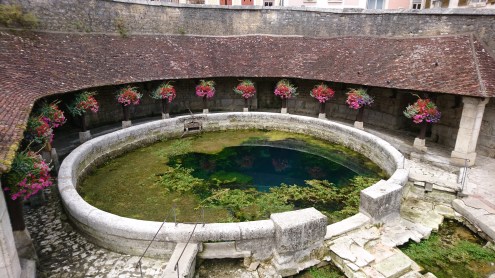
The following day, our third in Tonnerre, was spent wandering the town and exploring some of its sights. The most famous is the Fosse Dionne, a spring-fed pool with a prodigious flow of water averaging 300 litres per second. The town of Tonnerre was essentially built around this spring, and in the 18th century an eleborate lavoir wash basin was built to surround the pool.

Fosse Dionne, Tonnerre

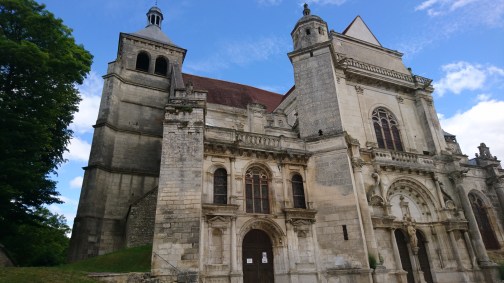
We then ascended to the Eglise Saint-Pierre, with its original foundation and choir surviving from the 11th century, its Renaissance side chapels dating from rebuilding works after fire in the 16th century, and its classical-style southern facade and portals from the completion of those works in the 17 century. It’s therefore quite a mix, but very imposing and commanding a great view over Tonnerre.

Eglise Saint-Pierre, Tonnerre3

Back in the centre of town we had a look over the Hotel-Dieu, the 13th-century hospital for the poor built by Margeurite de Bourgogne. At the time it was the longest medieval hospital in Europe. After 350 years it was replaced as a hospital by a new adjacent building and it became a chapel and mausoleum, then a market after the French Revolution, before being declared an Historic Monument in 1862. It contains the tombs of its founder Margeurite de Bourgogne (died 1308) and the Marquis Louvois, Count of Tonnerre (d. 1691). The space inside the Great Hall of the Poor is impressive, as are the 16th-century altar and the sacristy with its 15th-century marble Mise en Tombeau.

Leaving Tonnerre we travelled to Flogny-la-Chapelle, a somewhat out of the way place but where we had expected to find a stone mooring with services. To our disappointment when we arrived, much of the quay had collapsed into the canal, we had to moor alongside another boat that had already arrived, and there were no services to be had. A shame, as it was quite a pretty spot. There were metal baffles ready to be driven into the bankside to repair the damage; we hope it won’t be too long before the work starts.

Passing on from Flogny, the next day we arrived at Saint-Florentin, where we found a pleasant, well-equipped and well-managed port de plaisance.

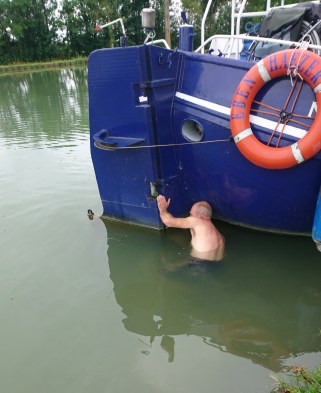
With a week in Saint-Florentin and in no hurry to keep moving, we took the opportunity to undertake some necessary maintenance and administration. First up, we stripped down for a swim and manually cleaned the weed and debris that had collected around the propellor and shaft. Then, with the help and advice of Didier, who ran the excellent marine works yard near the port, we had some specialist marine transmission oil delivered so we could empty and refill our precious gearbox.

cleaning-the-prop-saint-florentin3.jpg

Then we set about discovering the town. Delights included a couple of half-timbered houses, an historic church and old towers, and a market that operated on Saturdays in a market hall and on Mondays in the hall plus the surrounding streets.

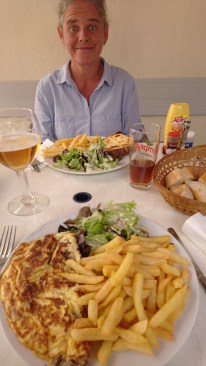
We also found a lovely little place for a beer, wine or casual lunch, the Café des Fontaines, where we could enjoy our new favourites – croque madame with frites, and omelette composée with frites. Bonnes frites!

Lunch, Cafe des Fontaines, Saint-Florentin

Saint-Florentin, we found, is also blessed with an excellent supermarket, a couple of very good hardware stores, a garden centre, several boulangeries and butchers and various other commercial services. There is a nearby rail station with services direct to Paris. The marine atelier was a useful facility for any work we wished to do or have done – mechanical, painting, repairs. And the capitain of the port de plaisance, Vincent is an absolute gem – good-humoured, endlessly helpful, fluent in English. It didn’t take us long to change our plans for the season and decide to make “Saint Flo”our winter port, where we would leave Eben Haezer in mid-October for six months when we returned to Australia. There was an added bonus:  because we no longer needed to travel so far to a winter port such as Briare, we could afford to spend a good length of time in Paris – an idea which, in its own regard, of course but also after so much rural cruising, took on a brilliant shine.

As a result, we decided to travel to the regional prefecture in Auxerre and apply for my carte de séjours, or long stay visa, using the port at Saint-Florentin as our residential address in France. This was to be the first of several trips to Auxerre, we were sure (not just because French bureaucracy would demand it), and we were delighted to find it a beautiful, welcoming, historic, buzzy town.

We entrusted our paperwork to the prefecture in Auxerre and were told to return in a couple of months for the next stage of the process. Having read all kinds of stories of woe concerning the barriers to gaining a long stay visa, we found it no so difficult so far and could only resolve to deal with things as they emerged.

Premier Season – some observations

Lesson Number One from our first season – Just. Slow. Down. If you think you are travelling slowly enough – Slow. Down. Some. More.

This rule applies both to the speed at which you and your boat are travelling at any given time, and also to the distance you try to cover in any given day, week, month or season.

Speed 

Our boat displaces more than 30 tonnes and is around 19 metres long. It is driven by a 110 horsepower motor with a throttle but no gears apart from forward, reverse and neutral. It doesn’t have brakes. It has a flat bottom with no keel, which gives access to shallows but also means it has no cut through the water, performing more like a puck on ice.

These characteristics always formed a part of our consciousness, but it took time for us to realise just how much they meant. You just learn from experience, I guess, that approaching locks, banks, quays and other craft – indeed any manoeuvre or operation – demands a calmness, a slow speed and a willingness to back off and try again rather than resorting to more throttle and radical rudder.

There can be pressure to speed up, when you have another boat waiting behind you as you enter a lock, or waiting on the other side for you to complete your entry and exit so they can take their turn. As the season wore on we learned to ignore that pressure and go at our own pace.

Plus, it’s a barge. It’s not a fancy lightweight plastic boat with double bow and stern bowthrusters that can move it sideways, stop quickly when reverse is engaged or take tight angles. There’s no point in trying to operate the boat as a sportscraft.

Slow. Graceful. Calm. Incident-free. The way to go.

Distance

We definitely planned our initial season badly, trying to cover too much in too short a time. We are glad that circumstances (and friendly advice) more or less forced us to curtail our trip early, stopping in Épinal rather than trying to push on in haste to Roanne.

The thing is, you are travelling at not much more than 5-6 kilometres an hour – on a canal the official limit is 6kph in any case. And there are so many things to see, and so many more that present themselves unexpectedly.

Our first season saw about an equal split between days of travel and days of rest. I think in the future we would increase the ratio of days of rest by at least 50% and better still double them – two days of rest for every day of travel.

This would give you the time to stay in a place for a while, get to know it, relax and enjoy the town/village/countryside without always thinking about the next cruise day, the next stopover.

Especially early on, we had days of travel where we were underway for 7-8 hours. I see blogs and accounts of other cruisers where this seems common. We have decided that apart from special sectors that demand it, this is too much. We want to leave a place relaxed and at a civilised hour, and travel until no later than early-mid afternoon, perhaps an average something under 5 hours a day.

This leaves us still fresh and keen to discover the pleasures of our next stop, but it also means, more often than not, that we can easily find a place to moor, before the late-afternoon traffic arrives.

And if you find a place you love – for its sights or its food, its serenity or its scenic beauty, or even better for the people you meet there – why on earth should you hurry away from that?

Our future itinerary planning will take this into account and will aim to give room to speed up if need or mood dictates, rather than struggling to find ways to slow down from a packed and rushed voyage plan.

Locks

We only did 142 locks in 2016, which was a shortened season for us. In future seasons we will probably do more. It was a great learning experience, a traumatic test of resolve and a fascinating insight into the engineering and social life of European waterways, all rolled into one nerve-racking package.

We won’t bore you here, since we’ve mentioned some of our experiences in our other posts, but ere are a few things that stick out.

Some locks are very, very big. On rivers, and on big commercial canals. Some are quite small, although none is smaller than about 38 metres by 5 metres, the French “Freycinet” standard.

We probably experienced about half a dozen different mechanisms and systems in our first two or three dozen locks. Some, especially the big ones, are controlled by a person in a tower. Some are activated by a laser beam triggered as you pass it. Some are alerted by a remote control you are given, but still require you to activate the mechanism once you are in the lock by raising a pole (the blue one, not the red one!). Some are alerted by twisting a pole hanging down in the middle of the canal but also require the blue-pole touch. Some are manually or electrically operated by lock-keepers, with or without your assistance.

Generally, a single red light means the lock is not ready for you; a red and a green light means the lock has been activated (filling or emptying for you); a green light of course means you can proceed into the lock. A double red light is not good, it often means the lock is out of action for some reason.

Our first season taught us the following things:

  • locks are not there to stuff you around; they are navigation aids to rivers or canals that would otherwise be impassable. So they just have to be dealt with.
  • lock-keepers for the most part like what they do and want to help; they have their bad days like all of us, and they get pissed off with people constantly doing dumb things or being rude; but we found them generally wonderful, rarely a bit grumpy or lazy and frequently absolutely delightful. We always had a supply of small cans of beer or soft drink for those helping us through several locks; we always helped with manual winding mechanisms when we could; we always said bonjourca vamerci, au revoir or prochaine or bon chance, as appropriate; and we always (or almost always) found unstinting, generous assistance with our passage.
  • what the VNF does is nothing short of magnificent. I am sure the system costs a great deal more than it recovers in user fees. Apart from local traffic, most of the system’s users are not French citizens. Maintenance can be a bit patchy but in several thousand kilometres of waterway, much of it far removed from population centres and industrial or commercial production, we found a lot to admire and be thankful for. We fly their flag proudly and with gratitude.
  • locks can be dangerous and need to be treated with respect. We don’t wear life jackets unless we are instructed to, but we take meticulous care of ourselves in locks. Firm footing, gloves, ropes carefully organised, taking time to make sure things are correct and safe. A sharp purpose-designed knife in pocket in case there is a necessity to cut a line. Strong visual and verbal communication between crew members. Not making assumptions but checking every step. Not allowing people – lock-keepers or onlookers – to distract from the task at hand at key moments with casual conversation or idle questions. Do everything slowly and deliberately. Back off and start again if there is doubt. All these things work to avoid the horror of a fall into the lock, a finger or leg caught by a tensioned rope, a boat caught on an obstruction, or just a scare that can ruin the calm and enjoyment of your day.
  • in 2016, even with a shortened season and even though we did stretches on rivers with only a few locks, we averaged 5.5 locks a day. In future seasons, depending on the waterways we choose, that may increase. Locks are a daily part of cruising through France. It’s as well to adopt an attitude and an approach to dealing with them that adds to your experience, not as something to be endured or grumbled about. As it is in our minds right now, we can’t imagine returning to the canals without the lock experience; it’s part of the charm, the attraction and the call to return.

Moorings

The variety of lock systems and mechanisms has nothing on the bewildering array and standards of mooring you will confront when you cruise the European waterways. We covered the field from grassy banksides in the middle of nowhere with no bollards or other objects to tie up to, through bustling modern marinas with floating pontoons and every conceivable facility, to heavy stone quays in the middle of large towns.

Every morning when we set off our minds were filled with questions about the next stop – would there be a space available;  should we ring ahead; was there an alternative within reasonable cruising distance; did it have power/water; would it require difficult manouevring?

In our first season, we only had recourse to moving on from a planned stop once. We only once had to raft up to another boat because there was no space left. We only struck three ports or mooring places out of 26 that called for “hairy” or nerve-wracking final manouevres (three is more than enough, I can assure you!).

Most of our moorings that we paid for had adequate electricity and water – although Anseremme only had 6 amp power, which limited our systems a bit. The average price for a paid mooring was generally less than €10, with only a couple of exceptions. Eight of the 25 stopovers between Schoten and Épinal were free of charge.

Particularly in the latter part of our trip, we tried to arrive at moorings in the mid-afternoon or earlier, which meant we had a better chance of securing a berth before the late afternoon rush.

We collected a wide array of electrical and water connections and extensions to deal with the norm, which we found was variety.

Weather

We failed to keep detailed logs of weather conditions, so we can now only give you an estimate. From memory, about one in five days experienced significant rain. About two in five days experienced very strong heat and sunshine (this was in August and September). The other two out of five days were somewhere in between, perhaps with a few light showers some days, perhaps with periods of hot sun, but mostly either patches of sun with scattered cloud, or overcast but bright.

We wore hats, we wore sunglasses, we wore shorts and t-shirts or polos most of the time. We got suntans, especially on our exposed legs and arms and necks. We used sunscreen. In rainy weather we wore rainjackets, but only light ones because even in the rain the temperatures were moderate.

For the most part – or all of it, to be honest – we loved the weather that France threw at us. We had got lucky, I suppose – in May/June 2016 there were flooding rains through much of France with much damage along the rivers, some loss of life and many boats stuck and unable to move.

In the latter part, in late September, we noticed the arrival of strong winds, even though the days were still warm and sunny. This made navigation more tricky as the winds blew our boat across the water. This may be a normal feature of this period and, if so, we feel we should take this into account in the future, because it’s not pleasant.

While we were in Epinal at the end of our trip, we really noticed the change in weather. The summer was quite late in finishing really, with lovely hot days right through until the beginning of October. Then one day it just decided that was the end of it, with no transition. It just went colder. With more grey days. Not more rain, but certainly more coats and beanies. We both like cool weather, so it was no problem, and we loved following the changing colours of foliage as autumn deepened. But we were glad of our efficient central heating.


Premier Season – review of the boat

No matter how many books, blogs and other accounts you read of cruising the canals and of the experiences of others, nothing really quite prepares you for the reality of navigating a large old steel boat along narrow waterways, living on it every day and coping with the challenges thrown your way.

For the sake of the record, we might try to list a few of the things we found confronting us, the little things we found that made life interesting, or more comfortable, and the things we might like to change or improve for future seasons.

Every person, and every crew, is different in their preferences, tastes, expectations and ambitions. So these are personal observations, even if a few of them seem to have greater universality than others.

How to be very glad you bought a boat that was already well-equipped and in excellent condition

Some people have a desire to buy a “project”; we didn’t. It was wonderful to be able to set off on our adventure without spending months renovating, redecorating, equipping and setting up our boat. We had probably 80% or more of what we needed, and the remainder was easy to buy and fit or stow. From major equipment (like a recently-rebuilt engine and a generator in good working order) down to sheets and towels and plates and cutlery, Eben Haezer was pretty much ready to go and much of what we bought were personal choice items.

To a large extent this was because we bought a boat that was lived on full-time by a professional experienced boatman, rather than a part-time cruiser being sold by someone from another country who only used the vessel a few weeks or months a year.

The previous owner, Pierre, bless his heart, left us with a fairly comprehensive set of mechanical tools, engine spares including belts, filters, automatic shaft greasers, cleaning cloths, oils and lubricants and cleaners.

All the important systems and major pieces of equipment on the boat – engine, generator, water and waste pumps, toilet, water heating, central heating, electrics, water tank and plumbing, cooking range and range hood, combi-oven, lighting, radios, steering lines, ground tackle and ropes, fenders, fuel tanks and lines, communications/navigation equipment and antennae, washer/dryer, portable A/C unit, refrigeration – were in excellent or near-new condition.

This is a fantastic advantage in setting off with confidence, with minimum fuss, and in superior comfort in one’s first season of cruising.

How to wish you had more documentation and/or time to learn how all these wonderful systems work

This was our own fault, I guess, since we had more than adequate time to bother the previous owner to go through (just once, more, please ?!?) how to operate or understand the mysteries of the electrics, pumps, boilers, engines, gears, greasers and so forth. But really, in the end, how much time can you expect him to spend on teaching you what he no doubt thinks you should know already?

On the other hand, there was in our case, probably the same as for just about everybody on every boat, a distinct lack of documentation – operations booklets, manuals, spares lists, etc, for the boat’s major systems and equipment. We should spend time collecting what we can from the internet and other sources. It will take time, but it will be worth it for us in the end and might form a legacy to any new owner when the time comes to sell our boat.

How to be grateful for, or reconcile yourself to, the systems, set-up and equipment you have, and what you might add

Engine, cooling, transmission, drive and steering

Our engine is a DAF575, a true workhorse of canal barges pushing out 110 horsepower. Made in 1973, rebuilt in 2014 with only 182 hours when we bought her, she is reliable, worry-free and powerful enough for our needs.

The transmission and drive are strong and simple. I haven’t actually identified the make of transmission (still trying) but it works! The shaft has three greasing points, equipped with SKF System 24 “set-and-forget” automatic lubricators. These are marvellous little things, gas-operated, which you dial to pre-set the rate of lubrication and then just check annually for replacement. We also have manual lubricant injectors in reserve in case we ever need to override the automatic system.

Steering – simple chain and cable system. With a big wheel, heavy rudder and some 30+ tonnes of displacement, it works well and easily and, we hope, never or rarely suffers a breakdown – in which case we have replacement cable which is easily and quickly fitted, even in an emergency. We would never go hydraulic, which is complicated, sensitive, maintenance-heavy… all the wrong words.

Engine cooling – we are lucky enough to have a closed system, rather than a raw water cooling set-up. No inlets, no filters, no pumps and no impellers. Driven by engine pressure, cooled along the hull, it just goes and goes. Never a fear of impellers disintegrating; never a need to clean weed and other debris from the inlet or the filter. We have heard of, and spoken directly to people who suffered it, boats who have had to stop every few hours in a heavily-weeded section of canal just to clear their inlets and filters. Not a problem for us!

Power and electrics

Our system is set up to select between no power, shore power, generator or main engine for the source of electrical generation/supply. Shore power and the generator provide 230v AC; the battery circuit is 24v DC, stepped up to 230v via a 3000-amp inverter and stepped down to 12v for controls, radios, etc. As far as it goes, it works well, although there are a few eccentricities in the circuit design, and an unfortunate spaghetti complex of wiring which one day we will get organised.

The generator is a Lister 7Kv unit, not new but reliable, air cooled and fueled with red diesel (much cheaper!) stored in a dedicated steel tank. It has a separate 12v starter battery and is remotely activated via a starter button and kill switch in the forward cabin, and also on the gen set itself. When running, it supplies more than enough power for all our needs. It is also noisy and creates a lot of vibration, being a BIG unit, located in the forward well. If you started out new, you may well decide to buy a much smaller, modern, silenced unit in a muffler box. But we have what we have and it does its job when required, which is not often enough to worry.

We learned early on that access to shore power requires (1) a lot of extension and (2) a multitude of connectors. So we have our basic shore power lead plus another 40 metres of extension lead, plus connectors that match two-point and three-point, male and female junctions. Since we tooled up in that area, we have no problems.

No problems, that is, as long as the power supply is reliable. On-shore power supply is generally 10amp, rarely 15amp, but sometimes as low as 6amp in smaller moorings or where you have to share a point with another boat via a splitter. It means you have to be constantly aware how much load you place on the supply at any given time.

We also have a small solar system, basically two rigid panels on the wheelhouse roof and a small regulator, ostensibly providing a trickle charge to our house batteries. I am not sure how much charge they are producing, to be honest, and the panels look to be a bit old. We will definitely look to upgrade this system in the future.

Cooking, heating and cooling

We were concerned at first to find that the stove was a domestic style four-burner electric set; we have always preferred cooking with gas and we were concerned the drain on power would be a problem. We were persuaded, though, when we met so many professional boatmen in Belgium who refused to have gas on board (for reasons of safety) and the cost of installing a gas system – external fixed steel ventilated gas box, plumbing and a new range. With shore power we are OK; otherwise the generator supplies more than enough and even then we only need it for an hour or less. One thing we would like to investigate is a two- or three-burner inducton cooktop to replace the old iron-element four-burner.

We inherited a counter-top combi-oven – a combination of microwave and convection over/grill – that proved to be a marvellous bit of kitchen kit. Programmable or manual, it made thawing, roasting, grilling, baking and reheating very easy and power-efficient. Thoroughly recommended, and less power and space than a conventional oven.

Being Australians, we were sure bbqs would be an important part of our cooking mix, so we bought two small units – one gas and one charcoal-burning. As it turned out, we used them less than we thought we would, but they are both wonderful. We have cooked/baked whole coquelettes, and many, many sausages and brochettes, both vegetable and meat-based, and even on occasions things like rice and pasta. We prefer the charcoal bbq but use gas for quick convenience. The French are not huge users of bbqs but when they do, they love masses of smoke!

The final piece of our cooking/kitchen kit which we added was a coffee machine and grinder. We’re happy with a plunger (French press) but there is always the problem of disposal of the grounds – on a boat, harder and messier than you might think. Our espresso machine is nothing flash but it delivers an adequate shot…. regrettably but also thankfully, better than 90% of the stuff you might be served in a French café!

Heating is provided by our central heating system with a diesel-powered Kubola boiler and six radiators throughout the boat. It’s fabulous, cheap and finely adjustable and could easily sustain us through the harshest French winter. We would never consider a solid-fuel stove because (1) it takes up a lot of space, which is at a premium anyway (2) it requires sourcing and storage of fuel – wood or briquettes or whatever, which is a hassle and another space-destroyer (3) it needs another hole in the deck for the chimney, and holes are always potential leak-points and (4) really guys, it’s romantic but it’s dirty! Needs cleaning every day, lots of ash, lots of tar on the chimney… nooooo!

Cooling is basically open doors and windows, plus two or three small fans for circulation. We were bequeathed a small portable air conditioner with a window exhaust, which we used on some of the hottest summer days but was never really a central part of our climate control. Nice, but not essential.

Mooring and ground tackle

We have a massive anchor with many metres of heavy chain, and a massive manual winch to which an electric winch has been added, driven off the generator. Anchors on inland waterways are basically emergency equipment, and we have never used it. In fact, we are not certain we know how to… something we should probably put on our to-do list.

Eben Haezer has heavy duty double bollards on either side at the bow, and single bollards aft, plus multiple belay points fore and aft and at intervals along the gunwales. We were bequeathed four x 20-metre lengths of good quality rope for regular lock work and mooring, plus extra heavy-duty nylon rope for long-term mooring. We found the system of having four sufficient lengths of rope – one for each side fore and aft – by far the best system for fast adaptation to situations such as locks and port moorings, without needing to swap ropes from one side to the other at the last moment. Plus we found that in many locations, the more mooring lines the better, two at each end secured in opposite directions, gives greater security and stability.

Before leaving Schoten we had four mooring stakes made up for us from short lengths of angle iron, sharpened at one end at with a flat plate welded to the other end for banging in with a heavy mallet. We only used these a few times but found them very useful for when there was no bollard available on shore. Best to use them in pairs, hammered into the ground at cross-angles; otherwise you might find them easily dislodged by the wash of another passing boat.

We also made up a passarelle, or boarding gangplank. Ours is simply a sturdy ladder with sections of thick marine ply and checkerplate secured to one side. This provides a safe, secure – and cheap – gangway for accessing the shore when the ground is much lower than the deck, or uneven, or otherwise requiring a jump. It came in handy on many occasions.

We inherited a set of fenders when we bought Eben Haezer. These included four solid composite glissoires – long, narrow fenders that protect the bow and stern on each side. We also had four heavy-duty inflatable fenders, one at each end and each side. This are primarily for additional protection and should not be used to take the full brunt of any contact, as they would simply pop under the weight of the very heavy boat (as one did!). Despite this protection, we still managed to bump and scrape the hull from time to time; at first we worried mightily about this but we became used to it, as other boaters seemed to, and we just kept our brushes and paint handy for periodic touch ups.

Navigation

We inherited a laptop, loaded with software from PC-Navigo, connected to our AIS (Automatic Identification System), which allowed us to plan and monitor our travels. You could get by without it (unless you are over 25 metres in length, in which case it’s compulsory) but we found it fantastic – for planning our journeys, seeing any operations (such as locks or lift bridges) ahead, and monitoring our progress in real time. Plus it told us when any other large vessels were approaching, from ahead or behind, allowing us to take whatever action we thought necessary to avoid or avert. Very reassuring!

Lighting

The wheelhouse is the only place with 12v overhead lighting – running off the same stepdown converter as the radios, AIS and other control equipment – meaning the “bridge” had lighting whether or not shore-power or 230v inverter power was available. The rest of the bat is equipped with 230v lighting, running off the inverter, which we think is perfectly fine, given the low current draw. We are not great fans of the lighting design or fittings, though, and it proved to be difficult to find replacement bulbs/LEDs for them, so we will probably replace those in the future. For 2016, it was no problem.

Refrigeration

We inherited a full-size domestic upside-down frig-freezer, which we adore. It uses the majority of our daily power draw, but who cares. We buy fresh as often as we can, but we love to buy lots of good food, and when you are not sure when you can next buy a good piece of beef or a succulent free-range whole chicken, or a pack of  lovely laminated pastry or whatever, a freezer is a precious thing. We love it, and we knew we were never going to compromise with a teensy bar fridge, eutectic camper-style chamber or an ice box.

Water

We have a rigid plastic water tank in the rear of the boat that holds 1100 litres. For two people this is quite adequate, although we found it amazing how quickly we can go through it. We fill up at every – I mean EVERY – opportunity we get and so never found a time when we were short of water…. although we frequently came across other boats, mainly hire boats, who moored up and rushed to the water taps to replenish their exhausted supplies – mainly, we suspected, because they had simply shunned opportunities to fill when they could.

Early in the season we found it necessary to stock up on extra lengths of hose, for those surprisingly frequent occasions when the taps were located too far from the boat. We also learned to have a box of fittings of various types and dimensions, since French villages, towns, ports and moorings have agreed to disagree on standardisation. Plus you need spares – because inevitably you will leave a fitting behind at some stage.

For hot water, we have a small immersion-coil electric heater in the bathroom, providing hot water to kitchen sink, shower and hand basin. Some people love the idea of a boiler running off the main engine but for us that’s an expensive addition to the piece of machinery that’s central to your motive power and the small room it’s located in. For us, if we cruise for a few hours the power that the engine generates is sufficient to heat enough water until the next day; or we can simply plug into shore power (which we would pay for anyway).

Bathroom and laundry

We love our bathroom, set up as it is in a domestic style rather than a pokey shipboard manner. We have a basin set into an expansive vanity – believe me, even in a shipboard bathroom, having plenty of surface for your odds and ends is wonderful, especially when it doubles as your laundry. We have a small bath – I guess what you would call a three-quarter bath – with sufficient room to stretch out in or to take a perfectly adequate sit-and-crouch shower using the hand-held rose. Ideally, we would lift the deck height above the bath to enable a standing shower but, as it is, it is perfectly comfortable and efficient, as well as space-effective.

The toilet is a macerating marine toilet, with a plumbed cistern flush system. Apart from the noise it makes when the waste pump operates, you would not really know you were not using a standard domestic flush toilet. Gotta love it! We do not have a blackwater holding tank – there isn’t much point, since there are hardly any pump-out points in France, so you would be reduced to pumping out a couple hundred litres of the stuff at the unfortunate place of your choosing, rather than one flush at a time.

Our bathroom also holds a front-loading washing machine and a condenser dryer. They are both marvellous pieces of kit which we love. We could, if we were forced to, take our clothes to local laundromats, of which there are plenty in France although sometimes located at a fair remove from the mooring, and always requiring coins or tokens which you may not have on hand. With our own washer we can wash wherever and whenever we are, independent of the weather and location. Kind of like at home, right? The condenser dryer, instead of blowing hot air onto the clothes and out into the laundry, extracts moisture before draining it away as condensed water into a separate reservoir, reducing both heat and moisture inside the boat.

General appearance, fit out and decor

Some people love everything to be sleek and modern; others like it all to be olde-world, all varnished wood and polished brass. We sit somewhere in the middle. Eben Haezer is 100 years old and has graceful old-fashioned hull lines. Her superstructure and interior fit-out is much newer and to a very large extent is pragmatic more than romantic.

Interior linings – walls and floors – are modern composite materials, and most of the woodwork in the wheelhouse is also non-traditional, much of it simply painted white. The windows in saloon, bathroom and cabins are large, aluminium-framed, sliding style. The advantage of this modern fit out is the work and cost of upkeep – both minimal – but the downside, if there is one, is an absence of “atmosphere”. We decided we quite liked the space and ambience and lightness of the interior; tempting though it is to introduce a traditional touch with wooden linings and brass fittings, we are probably better off spending that money on good quality decor such as light fittings, cupboards, chairs, rugs and other stuff.

Entertainment

Most liveaboard boats and every camper van in Belgium and France comes with a satellite dish and big TV, so we thought we would follow suit. We bought a large flat-screen TV in Schoten and a satellite decoder and signal detector in Antwerp (the boat already came equipped with a dish). They work fine and we had access to dozens of channels in English. As time went on, though, we found we really didn’t watch too much; we’re not big consumers of TV, even at home. Butwe have for when we want it, so all good.

Music is provided in the wheelhouse via a car radio in the overhead console, with good but not great speakers. We plugged my phone into the radio to access the playlist stored on the phone, or via streaming services when we had a free signal or felt we could afford to burn some of our data allowance. The system is adequate but at some stage we will probably upgrade and extend the system to the saloon.

External spaces

Eben Haezer has a large elevated rear deck which provides a lovely space to sit and enjoy a drink or alfresco meal, and to entertain visitors. In Schoten our good friend Roland took us to a place where we could buy luxurious thick-pile artificial grass matting at great prices. We wish we had not baulked at the idea, because it would have provided excellent cover. The deck gets quite on a hot sunny summer’s day, and the matting would have insulated the deck as well as being kind to bare feet. If we find good quality turf matting at a decent price, we will probably go that way.

Shade on the deck is provided by a large market umbrella which we inherited. It works very well but requires regular moving to match the movement of the sun and, because of its size and weight, it doesn’t tilt. We have thought about a fitted marine canopy or large bimini, but these are very expensive and, until we work out a good design, we’ll deal with what we have.

We also inherited a huge metal and glass outdoor table and four lovely outdoor chairs – large, adjustable, folding. The chairs are great but the table is just way too big. When and if we find a smaller version we like, we will swap, for sure, giving much more space on the rear deck but still allowing for eating, relaxing and entertaining.
Summary of our first season

We started our premier season in Schoten, Belgium and ended it in Épinal, France. We arrived in Schoten in early July; our cruise lasted from August 8 until September 27; we left Épinal and returned to Australia on 6/7 November.

We travelled on the following waterways:

  • Kanaal Dessel-Turnhout-Schoten
  • Kanaal Bocholt-Herendals
  • Zuid-Willemsvaert
  • Kanaal Briegden-Neerhaven
  • Albertkanaal
  • Canal de Visé-Harcourt
  • Canal de Monsin
  • La Meuse et son Canal
  • Canal de la Marne au Rhin (Ouest)
  • La Moselle et son Canal
  • Canal des Vosges
  • Distance covered – 640 kilometres
  • Locks – 142
  • Tunnels – 4
  • Days of travel – 26
  • Days of rest – 24
  • Average hours on travel days – 5.25
  • Average daily distance – 24.6
  • Average speed – 5.5 kilometres per hour
  • Fuel consumption – 450 litres @ 3.4 litres per hour
  • Cost of fuel – total €600 @ €1.33/litre (inc. delivery)
  • Cost of mooring at Schoten Yacht Club (33 days) – €16 per day, including water and electricity
  • Cost of mooring at Epinal (40 days) – €5 per day, including water and electricity
  • Cost of mooring while cruising (50 days) – varied from free (with or without facilities) to €16 per day, including water and electricity
  • Total cost of mooring – €1000 @ €8 per day
  • Cost of winter mooring (without facilities) – €100 per month, payable on return
  • Cost of meals eaten at cafes and restaurants – €12-€40 per head (exc. drinks)
  • Estimated cost of meals for two people, eating out 4-5 times/week – €2600 @ €144/week
  • Estimated cost of wine and other drinks – €800  @ €44/week)
  • Estimated cost of groceries – €1800 @ €100/week
  • Total cost of mooring, fuel, food and drink – €6800 @ €1700/month
  • Cost of maintenance, repairs spares and upgrades – €3000

includes 4 deep-cycle batteries + 2 engine batteries + dual charger + battery monitor + labour to fit these; paint and painting equipment; hand tools and small electrical tools

  • Marine insurance – €900
  • Training and certification (2 people) – €1300
  • Cost of household items and upgrades – €2000

includes coffee machine/grinder, kettle/toaster, TV/satellite decoder, printer, replacement furniture, kitchen/tableware, manchester, 2 bicycles, 2 BBQs, 2 heaters, decor, other sundry items


End of our first season

After our side excursion to Plombières-les-Bains and Remiremont, we had about a fortnight before we were due on a plane back to Australia. Plenty of time to prepare Eben Haezer for the winter and secure her to withstand six months or so alone, empty and more or less unattended.

Thanks primarily to lots of advice and practical example from Knud and Erica, who had prepared their own boat Linquenda and departed a couple of weeks prior, we had a pretty good idea of what we needed to do.

The first job was to prepare the central heating system to withstand the harshness of a Lorraine winter, with temperatures well below zero, snow, and a frozen canal. Because Eben Haezer had previously been lived on year-round, the heating system was not “winterised” and so her boiler and pipes and radiators were filled with plain water. We needed to replace that with a mix of water and an appropriate form of anti-freeze.

A lovely chap from the marine workshop at Corre, further down the Canal des Vosges, was doing some work on our new American friend Ron’s big tjalk, and we were able to get him to help us, including supply of the correct anti-freeze and a demonstration of how to pour it into the system (to be honest, before his help, we didn’t even know where the inlet for the system was located!)

The process involved a complicated series of operations to release water from the system, replace it with the anti-freeze solution, and re-pressurise the system. While we were doing this we also decided to replace some of the older fittings – thermostatic valves and so forth. We spent several days on it in the end, as we discovered new leakage points each time we re-pressurised, necessitating a new round of pressure release and refill. We hope that we now know all we need to know about marine central heating systems!

We spent a bit of time touching up paintwork inside and out, washing curtains, cleaning rugs and carpets and stowing things in winter storage. Our bilges had thankfully stayed bone dry throughout the season, but I did a bit of cleaning in and around the engine room and generator room. There was still work I wanted to do (or, rather, commission a skilled person to do) on the electrical system, but decided it could wait until our return.

We bought extension leads and rigged them up so that while we were gone our friends who were staying in the port over winter could plug them into the power supply a couple of times a month, or when it got especially cold, to operate our battery charger. Other than the charger connection, when we left the boat we disconnected the battery banks from their circuits to prevent unnecessary drain from them.

The other last-moment task was to drain all water from the boat’s plumbing systems – the hot water boiler, the toilet cistern, the inlet and outlet pipes. As far as it was possible, we needed to remove all water from the system to avoid damage from frozen pipes and mechanisms. This involved connecting a bicycle inner tube to the main inlet, then one by one opening taps as I pumped air into the system with a small compressor until the taps released nothing but air. For the drainage system, I simply poured a standard anti-freeze down the sinks, bath and toilet.

We were now ready to leave Eben Haezer at her berth in Épinal and make the journey home for the southern summer.

On our last evening, we took Ron and Fredi to dinner at the Capitainerie, to thank them for all the help and companionship they’d provided us since our arrival. They couldn’t help themselves, though: the next day, Fredi cooked us all a magnificent breakfast, packed a lunch for Jane and me to enjoy on the train, and drove us to the railway station. Such friendships and generosity are a major part of what makes us keen to return next year.

And so it was that on Sunday 6 November, 2016 we locked the doors and hatches on Eben Haezer, humped our bags onto the train at Épinal for the short trip to Nancy, then the even shorter bus trip from there to the Lorraine TGV station, and then a very, very fast train ride to Paris-CDG-Roissypole.

Our plane was booked for the following day; we decided to spend our last night in France at a hotel close to the airport terminal. The citizen M hotel was a great choice – great value, handy to the railway station as well as to the terminal, very chic and modern and quiet, It was a great way to rest before our long journey home.

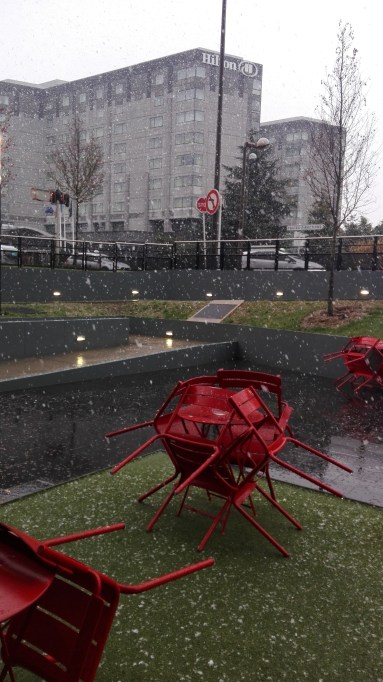
The day of our departure decided to put on a little farewell for us, with a touch of wet snow and  cold winds.

Paris CDG - Departure in snow6

We didn’t care; we were headed for an Australian summer…….

Getting ready to leave port

We returned from Scotland in late July and continued to get ready to embark on our watery adventure. We now had nearly everything sorted – skipper and radio operators licenses, new marine radios and Ship Station IDs/licences, boat insurance, and so forth. On board, we had inherited most of what we needed in the way of furniture and equipment, and what we didn’t have or didn’t like we acquired or replaced easily enough.

We enjoyed fantastic assistance from many people, including the previous owner, the wife of the yacht club president, and new friends we made among the small community of boaties in the yacht club. Foremost among these was Roland, an amiable Frenchman who had lived and worked in Belgium for many years as a professional boatman and now lived with his Belgian wife Myriam on a beautiful big boat moored right behind us.

Roland didn’t speak English at all and our French was still pretty poor, but we were able nevertheless to communicate on a range of subjects, technical and philosophical, with the aid of hand gestures, google translate and occasional help from Myriam, who spoke passable English. Roland found various spare bits and pieces for us to use on Eben Haezer, including an old ladder and some plywood and checkerplate we used to make quite a nice “passarelle” gangway. Pierre, the previous owner, several times drove us to chandleries around northern Antwerp to buy our new radios,  rope, fenders, and other boaty bits. Roland and Myriam also provided wonderful friendship and entertainment.

We were still waiting on the arrival of our ship’s papers from the Netherlands. We had been in Schoten for a month and were getting decidedly itchy feet so, after consulting with a few allegedly knowledgeable locals, we decided we may as well leave and let the papers catch up with us later. They would be delivered electronically in any case, and we thought that as long as we stayed within the borders of Belgium we should be OK. In final preparation, we bought a couple of bicycles and commissioned a local printer to produce shiny new letters for our boat hull, with her name, home port and registration  number. We didn’t know what that number was yet, so we just got him to print a bunch of numerals we could stick on later….

We had already booked and paid a deposit for a winter berth in Roanne in France, and we knew we needed to leave very soon to make it there by the end of the season. So, with a sense of excitement and trepidation, we set August 10 as our date of departure……

We plotted a course east towards the Meuse River, then south towards the French border. Apart from being the “scenic route”, it had the decided advantage of giving us a few days of quiet cruising along rural canal ways, rather than beginning our maritime life in the massive locks and heavy commercial traffic that we would have met if we had gone directly south via Brussels.

We checked our equipment and supplies, rechecked our charts, breathed deeply, and got ready for a whole new experience.

Preparing to cruise

If you have the money, and sufficient recklessness, it’s not hard to buy a large boat to live on in Europe. But if you want to take that boat along the waterways, without risk of accident, arrest, or financial disaster, there are a few steps worth considering.

First up, it is very helpful to be or to become proficient in manouevring and being in charge of a large hunk of unwieldy metal. Plus it is a legal requirement in most places to be certified as a skipper.

We now owned… and as of July 2016 were living on… our beautiful piece of maritime history and pleasure. But we were not certified to take her anywhere, or to operate the twin radios which were a compulsory part of ship’s equipment.

And to be honest, we had no idea what would happen when we tried to handle this very large and heavy boat. We were just a tad terrified, although determined to confront our terror.

There are a couple of legal-type necessities involved. First of all, the boat needs to be registered appropriately to travel through the waterways of Europe; theoretically that could mean under the flag of almost any country, although in practice your options are limited. Secondly, the boat needs to be equipped with two marine VHF radios (one to communicate with official channels such as locks,  the other to communicate with other vesssels), and these radios need to be properly  registered as Ship Stations with their own unique IDs.

I had no idea how to go about these processes, in English let alone another language. The brokers had promised to assist but, once all the contracts – and money – had been exchanged, they faded completely from the scene.

I hit the internet and found several companies who offered the necessary registration assistance, for what seemed to me reasonable prices. I chose a Dutch firm, Yacht Registration Holland, since for reasons explained below I had decided to revert the boat’s registration to the Netherlands, her country of origin.

I sent off the necessary documents of ship specifications and ownership, and settled back to wait…. and wait….

In practice, there were only really three options for country of registration for Eben Haezer. We could not register her in France, Belgium, Germany or most other European countries since their laws permitted only citizens or permanent residents to do so.

The first option was to register her as an Australian ship, since that was the owners’ country. But that would have taken weeks if not months of to and fro correspondence between Europe and Australia, and we were eager to get moving asap. In any case, she was an inland vessel in Europe and would never get near Australia, so it seemed a bit pointless, really.

The second option was to put her on the British Small Ships Register, a relatively easy process (given Jane’s British citizenship) that would have added her to the sizeable fleet of British-registered boats cruising the waterways of Europe. But it would have meant flying the Union Jack or Red Ensign, which for me, personally, and especially after the Brexit vote of 2016, did not hold great appeal to an Aussie in Europe.

The third and best option was to enter her in a modified short form on the Dutch cadaster. The Netherlands permitted boats and owners from any country; their registry was recognised internationally; the costs and renewals were easy; and we were comfortable flying the Dutch flag on what, after all,  is a Dutch boat. And so that’s the way we went.

The same company that achieved our ship registration also handled the registration of the Ship Station for our marine VHF radios and the Automatic Identification System (AIS) which we had on board.

The AIS is a marvellous bit of kit. Every vessel over a certain length is supposed to have it, enabling the ship’s position to be tracked in real time and logged in an international database. With a laptop and the right software (such as PC-Navigo), you can also use it in course planning and tracking – watching your vessel’s progress in real time along your predetermined course – as well as “seeing” other vessels lying or approaching nearby.

This last feature is wonderful for seeing the approach of other large vessels – especially commercial barges – as you try to navigate safely on narrow waterways, and even on larger rivers. You can see the name, size and type of vessel and their speed. And you can exercise caution or avoidance as you see fit. Plus it shows you exactly where you are and how fast you are going in relation to where you are heading. All very reassuring.

There were two final pieces to fit in the jigsaw before sailing away – a skipper’s certificate and a VHF radio operator certification. The skipper qualification required a boat operator license that was recognised in Europe with an additional certification for inland waterways. The first part, if you didn’t have it already, required a practical test on an actual boat; the second part was a theory exam with a high pass threshhold. Back to the internet to find options that didn’t involve sitting for tests in French, Dutch or Flemish….

There was a lovely chap in the Netherlands who could handle all of this for us, on his boat, or he could come to us in Belgium and do it all on our own boat. Sounded great, and we lined him up. But then the Dutch holidays intervened and, with time rapidly running out, we found it impossible to get hold of him. Back to the internet ….

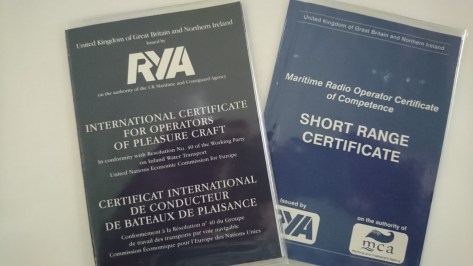
We found a boating school …. in Scotland! INDISkills, based on the Forth and Clyde Canal, east of Glasgow, could deliver everything we needed, and right now. We would qualify for an International Certificate for Operators of Pleasure Craft, with certification for Inland Waterways of Europe, as well as a Maritime Radio Operator (Short Range) Certificate of Competence.

DSC_3231

So from Schoten in Belgium we scooted off to Scotland for a week…. better yet, we were able to live on board the trainer’s boat – a lovely old English narrowboat – and turn an obligation into a pleasant floating holiday. Chrisy, our instructor/assessor, was delightful and her boat INDI was fabulous to stay on for a few days and to learn the ropes.

Our boat

We describe elsewhere (Looking for a boatFinding a boatBuying a boat) the process of finding and buying the right boat for us to live on and cruise the European waterways. It was a nerve-wracking experience but it worked for us and we now have a vessel that is sound, comfortable, reliable and eminently resaleable.

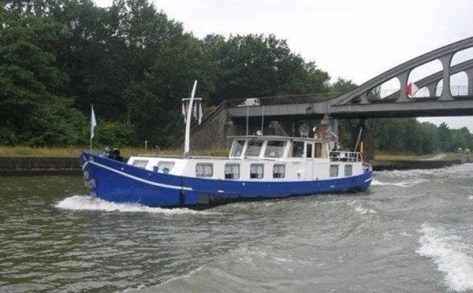
Eben Haezer* is classed as a “Klipperaak””, distinguished from many other styles of Dutch barge by her upswept bow and high stern, with a graceful curve along her gunwale.

eben haezer underway

She was built in 1916 in the shipyard of Worst Brothers (later Worst and Dutmer) in Meppel, a Dutch shipyard that originated in the late 18th century. She was first registered on 28/06/1917 in the nearby city of Zwartsluis, then again in 1943 in Groningen in the northern Netherlands, presumably when she first had an engine installed to replace her original sailing rig. Her latest registration before we purchased her was in 2006 in Brussels, when her papers were transferred to the Belgian registry.

Her hull and superstructure are steel. She is surveyed at 18.54 metres in length, 3.86 metres wide and with a water draft of 0.90 metres. Her air draft is 2.80 metres and her total maximum displacement is 37.38 tonnes.

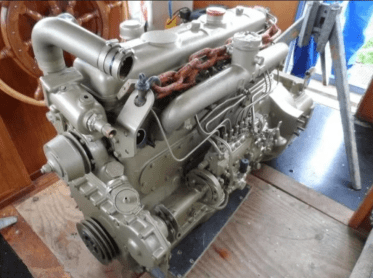
She is fitted with a 1973 DAF 575 diesel engine, delivering 77kW or 103 horsespower, driven through a 3:1 reduction via a driveshaft to a three-blade bronze screw propellor. The engine is located midships, below the wheelhouse, and is cooled along the hull via a closed system (no raw water intake). The engine was removed, completely reconditioned and replaced in 2013, since when she has operated for no more than 320 hours. Fuel capacity is 600 litres in a steel tank.

Screenshot_20170411-183239
The engine being replaced after reconditioning

She is also fitted with a hydraulic (not electric) bowthruster driven off the main engine.

A 7kvA Lister diesel generator is located in the bow, fed by a 500-litre steel fuel tank for “red” diesel*, which also supplies a Kubola boiler in the main engine room. The boiler feeds a closed central heating system, with eight radiators located throughout the boat.

Hot water is provided via an electric immersion-coil boiler in the bathroom. Total water capacity is 1100 litres in a rigid plastic cylinder in the aft well.

Electrics are 12v/24v/220v. 220-volt power is supplied by the generator or by shore power connection. Two batteries provide 24v to the main engine; a single battery provides 12v to the generator; and 4 x 200amp hour batteries provide house power for lights, cooking and appliances. There is a double solar panel on the wheelhouse roof providing trickle charge via a regulator to the house batteries. The system is completed by a Mastervolt 3200 inverter, a Mastervolt isolator and a Mastervolt dual battery charger.

This seems a pretty good system, well-fitted, to my layperson’s eyes… but I am the first to admit I have a great deal to learn about it and how to make it work best for us. Certainly I would like to upgrade the solar power capacity, and to examine fitting more power-efficient lighting and power points throughout.

The greatest drain on electric power comes from the hot water heater and the four-burner electric cooktop. The former is easily dealt with since it operates efficiently while under way, with power fed by the engine alternator. While on shore power, we use it only when not using other significant drags on power (e.g. cooking or heating).

The question of cooking is interesting. When I first saw the electric systems (four-burner stove top and combi convection-micro oven) my first thought was to replace them as soon as possible with gas. I prefer cooking on a gas flame,  and I knew that electric cooktops sucked a helluva lot of power.

But I kept coming across professional boatmen (Eben Haezer’s previous owner was one of them) residing on their own live-aboard vessels, none of whom would countenance having gas on board. For them it was a safety issue. Gas is heavier than air and, if there is any leak, no matter how insignificant, it will sink and collect in the bilge, presenting an unacceptable risk.

You might ask, as others have, why then do so many live-aboard boats have gas? It’s a fair question, and I’m not arguing one way or another. The risk of an explosion is most likely very low (otherwise we’d see more news reports of accidents) but, on the other hand, the consequences are pretty dire.

So for the time being I’m comfortable to stick with our current set up. If I need to, I can switch on the generator and for a few drops of red diesel have all the power I need for cooking as well as running other circuits. Plus, for much of our cruising season, we can and we adore cooking outside with one or both of our barbeques (one gas, one charcoal).

Accommodation on Eben Haezer is pretty damn comfortable, I have to say. Not luxurious, but everything a middle aged couple and their occasional guests might desire.

Amidships is the wheelhouse providing an excellent helm position, as well a comfortable lounge seat and room for a small dining table. Jane and I spend much of our time here, even when we are not underway, since it’s a great space with large windows for reading, relaxing and eating with a view on the outside world.

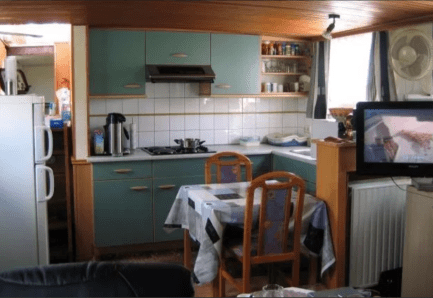
Forward down a few steps you enter the open-space kitchen (galley!) and lounge area. The galley is equipped with a four-burner cooktop, extractor hood, sink, benchtop combination oven (convection-microwave) and plenty of bench space for food prep and small appliances such as toaster, coffee grinder/espresso machine and kettle, as well as lots of cupboard space above and below.

Screenshot_20170411-183039

It also has a full-size upside-down fridge/freezer that runs on 220v and I have to say is quite magnificent. I cannot imagine living full-time on a boat (or in a house) with a tiny bar fridge, even though we shop most days and don’t really have a need to store huge amounts of perishable food.

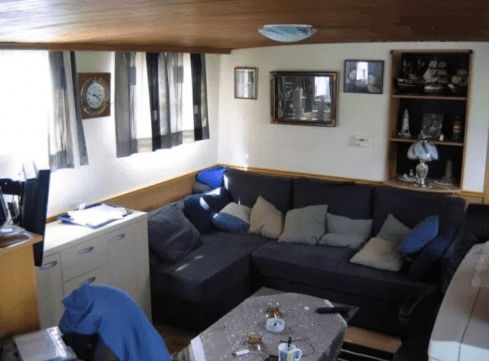
The lounge is separated from the galley by a small dining table, and includes a large sofa with pull-out bed, a coffee table, and a couple of cupboard units for storage. There are two separate central heating radiators in the lounge and they are more than enough.

Screenshot_20170411-182959

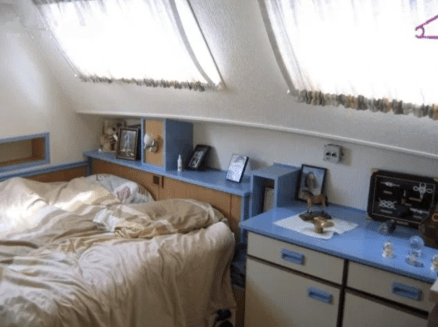
Moving forward from the lounge is the door to the main cabin, with a large double bed on one side, lots of storage for clothes and personal effects, and large windows to give plenty of light. The mattress on the bed was gifted to us nearly new by the previous owner and is utterly magical. Apparently it cost a small fortune and it shows. I have never had such an extended period of restful sleep as the months we spent on Eben Haezer in 2016.

Screenshot_20170411-183054
Hey skipper! That bed needs making

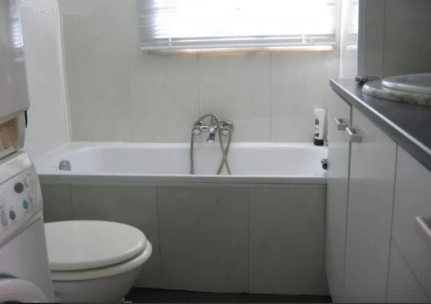
Back in the wheelhouse and moving aft, down a few steps is the passageway to the rear guest cabin. Before you get there is the door to the bathroom, which is equipped with a vast vanity counter and basin, a macerating full-flush marine toilet and a bath with handheld shower. The bathroom also holds a front loading washer and a dehumidifying dryer.

Screenshot_20170411-183205

The helm position in the wheelhouse includes a lovely old wooden steering wheel, operated by mechanical cable and chain mechanism. The wheelhouse has large windows providing an excellent viewing platform, and an expansive counter area for maps, reference books, computers, binoculars, hats, sunglasses and cold or hot drinks.

Overhead is a console with an AIS (Automatic Identification System) transponder, a Furuno mini radar unit and GPS positioning unit, two marine radios and a car radio with twin speakers. By coupling the Furuno and AIS systems with a laptop computer running PC-Navigo software, we are able to plot our routes, monitor our progress in real time and receive advance warning of approaching large craft fitted with the same systems (compulsory for all craft over 25 metres). It’s not necessary but it’s very reassuring.

On deck, there is a large entertaining area astern of the wheelhouse,  sufficient for a table and six chairs, as well as a storage box. Behind that and down three steps is the rear deck with room for our barbeques and two bicycles, as well as the hatch for the rear storage well.

IMG_20160530_111806.jpg

On the forward deck there is the anchor winch with an electric motor, and the hatch to the bow storage-well, plus the raised forward deck over the lounge and main cabin, which supports the mast and provides a large flat area for lying in the sun or storing items such as our passarelle* and boathooks and such.

Much of the finishing inside Eben Haezer – walls, floors, trims cabinets and so forth – features modern materials. One might rue this if you were looking for atmospherics and a heritage feeling, and we may over time attempt to re-introduce a bit of old-time charm. But the huge advantage this Dutch-Belgian passion for clean modernity delivers is an absence of the need to constantly repair and retouch.

We wanted a boat to cruise on, not work on. And Eben Haezer delivers that, while also feeling cosy, comfortable and welcoming.

* Eben Haezer, the name of our boat, is a Biblical reference, shared by a number of boats large and small in Belgium and Holland. Translated as “stone of help”, in the Books of Samuel it was a place that witnessed major battles between the Philistines and the Israelites. The Philistines won the first battle and captured the Ark of the Covenant; the Israelites won the second, after Samuel had offered a sacrifice, and erected a stone in memorial which he named Eben-Ezer. The location of this place is uncertain but has been often placed at Aphek (now Antipatris or more recently Tel Afek) in central Israel. Our boat was originally given this name and has carried it ever since; we believe in maintaining that continuity.

*Red diesel costs about 50-60% of the price for normal diesel. It is reserved for use on farms, in machinery, generators and boilers. There are potential heavy fines for trying to use it in  boat’s main engine, and boaters would be well advised to avoid trying to cheat the system.

*A passarelle is literally a footbridge. On a boat it is a small apparatus for getting from the boat to the shore when there is a gap, such as when you are moored against a sloping bank when it might be hard to jump or clamber from the deck to the shore. Our passarelle is a strong ladder with an attached piece of marine ply. Simple but effective.