Category Archives: 2016 Season Part 3. La Meuse en France

Charleville-Mézières

Charleville-Mézières is the capital of the Ardennes region. We arrived there on 25 August after a short trip from Bogny-sur-Meuse (3 hours, 17.5kms, 3 locks) and took up a mooring at a quay beside the camping park Camping du Mont Olympe, an attractive, treed area just across the Meuse from the main city centre. One crazy aspect is that a hundred metres further along there is a beautifully constructed modern harbour with quays and pontoons and really excellent facilities, but it is virtually empty, because it also has a footbridge across the entrance that prevents anything other than small boats getting through!
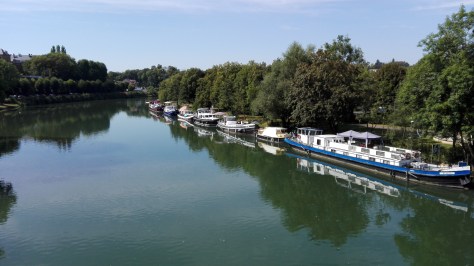
Day 17 - Charleville-Mezieres

Originally two towns (Charleville and Mézières) on opposite banks of the river, the city is now a conurbation linked by bridges. Charleville was founded in the early 17th century by the decidedly odd Charles Gonzaga, 8th Duke of Mantua, Duke of Montferrat, Duke of Nevers, Duke of Rethel and Prince of Arche and Charleville. Charles commissioned the architect Clément Métezeau to construct the Place Ducale, one of the finest squares in France, between 1612 and 1628. The grand square is surrounded by 27 sumptuous Louis XIII-style pavilions, which today house chic shops, cafes, restaurants and offices. It’s a great gathering place and a spot to sip a cafe or apéritif and watch the world.

Charleville-Mézières has two significant claims to fame: it is considered the world capital of puppetry, with a major biennial festival of puppet theatre and the headquarters of the International Association of Puppetry and the International Institute of Puppetry. The latter houses a remarkable automaton puppeteer which stages an automated puppet show every hour during daytime, featuring scenes from Ardennes folk tales of the four sons of Aymon (also known as the story of Renaud Montauban). The city is also famous as the birthplace of the poet Arthur Rimbaud and there is an interesting, minimalist museum devoted to him in an old water mill on the river opposite our mooring.
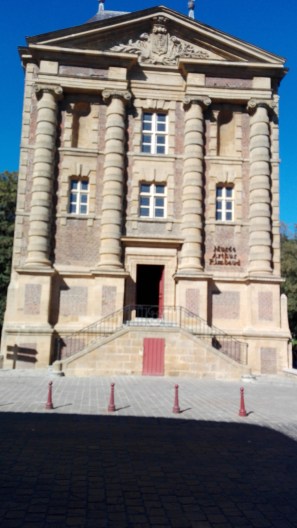
Day 16 - Musee Rimbaud, Charleville-Mezieres

While in Charleville-Mézières we befriended an English couple, Brett and Sandy who lived year-round on their lovely big old barge Rival, exploring the waterways from their base in Bruges. Sandy had taken up a hobby of turning used Nestlé coffee pods into earrings and necklaces which, whatever one’s aesthetic opinion, is certainly better than landfill!

We spent some time with Brett and Sandy, shopping, drinking coffee in the Place Ducale and, one evening, joining them for dinner at the swanky restaurant Le Manoir du Mont Olympe, above the park and mooring quay. The company was excellent, the terrace pleasant, the service efficient and the food quite good – scallops in lobster bisque, duck parmentier in a white comté gratin, beef carpaccio, and a substantial wine list – but in our opinion the place was over-priced.

We also ran into another English group we had met before in Fumay, on their sleek, expensive Linssen motor yacht. The most memorable feature of this group was their aged but friendly black labrador, who was the first point of attention for the skipper and crew at each port…. the poor fellow was nearly crippled in the hind legs and had to be (gently) heaved onto shore first thing at each stop.

On the subject of nature’s call, and knowing that this group had probably gone past the same human sludge we avoided at Monthermé, and knowing their swanky yacht would have holding tanks, we asked the skipper how he solved that problem. He responded that it wasn’t a problem, he just waited to empty until he found someone he didn’t like. I guessed this was an example of his dry, sarcastic British humour, but I’m still not quite sure…..
La Meuse Ardennes

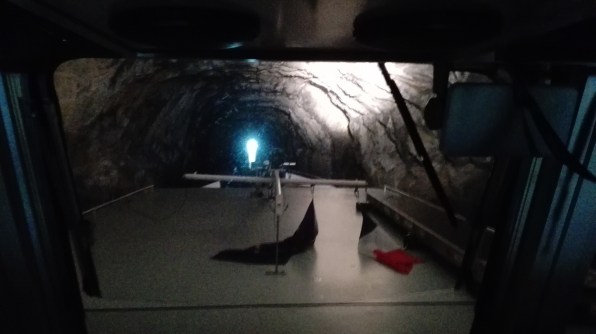
From Givet south to Charleville-Mézières, the Meuse flows through a valley in the Ardennes, a hilly, heavily forested region. It winds and meanders its way through some beautiful scenery, with steep hills, thick forests and rocky cliffs popular with climbers. On 22 August we left Givet, travelling 24kms and 6 locks upstream, and stopped for a couple of days at Fumay, a small town on a knobby peninsula formed by the sinuous curves of the river. Before we could enjoy much scenery, however, we had to cope with our first tunnel, at Ham-sur-Meuse – a mere baby at 565 metres long, but daunting nevertheless.

Day 13 - Ham Tunnel

The quayside port at Fumay was quite pleasant, with a semi-permanent fast food van very popular with locals. It was also handy to a small but very fine wine ‘cave’.

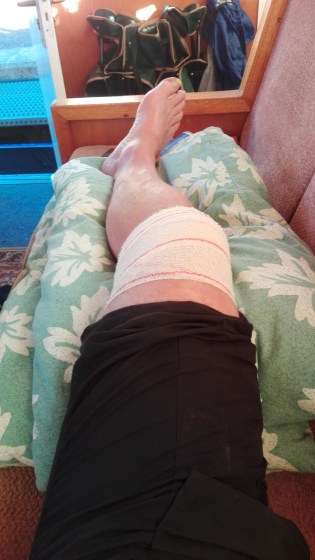
Although I obtained some excellent supplies at the cave, I had not consumed any when I suffered my first on-board accident, barely two weeks into our cruise. In making some adjustments to the engine, I had left the hatch in the wheelhouse floor open and, on reaching across to flick a switch I completely forgot about the hole and fell straight down it, injuring my knee and hip, although as far as I could tell without any breaks. I thanked the stars and promised to be more careful in future.

Day 13 - Fumay

The next day I struggled up the hill to the village pharmacy and bought a firm elastic bandage to support my injury. We also visited a lovely boulangerie whose ovens were virtually on the street. The French really do live in close harmony with le pain…. as I was, in a different sense!

On 24 August we left Fumay to continue up the Meuse, intending to stop at a renowned beauty spot, the village of Monthermé. For 6 hours, 31kms and 7 locks, we enjoyed some wonderful scenery, with droolworthy riverside properties and thickly forested river bends.

We had read much about the beauty of Monthermé and were looking forward to stopping there for a couple of days. About a kilometre, and a bend, before we arrived, however, we noticed a stench and a brown, foamy excrescence on the river, which we quickly identified as of human origin and which could only have come from upstream… that is, the next village, or Monthermé. As we rounded the bend, still marvelling at the natural beauty of the river, we discovered the source of the problem. There were a large number of boats moored at the port in Monthermé and, in addition, a newly created camping-car park had attracted at least a score of shiny white campervans in close formation, all with their noses almost bumping up against the quay. We decided immediately to continue on another 4 kilometres to the upstream village of Bogny-sur-Meuse.

The thing is, France does not have many pump-out points for boats, in fact almost none, even though many boats cruising through France (especially those from countries with stricter regimes, like Britain, Germany and the Netherlands) have fitted blackwater holding tanks. Obviously a real problem can occur when several boats, having collected a load in their tanks, decide all together to empty those tanks in the same place. Yuk!

In the event, Bogny, although undistingished, was pleasant enough, with a good pontoon mooring and very few neighbours. We passed a comfortable evening there before heading south towards the regional capital of Charleville-Mézières.

Crossing into France

20 August 2016, the eleventh day of our cruise, was to be the day we crossed from Belgium into France. We had enjoyed Belgium more than we anticipated, and we look forward to getting back there on a future cruise. But today, we were excited to be entering the country of our original inspiration, the land of apparently endless rivers and canals, villages, markets, great food and wine.

So we farewelled the attractive mooring at Anseremme and headed 15kms (2 locks) upstream to the poste frontière just beyond Hastière.

We tied up to the big quay and headed over to the border control office. I prayed that my rudimentary French would stand up to the rigours of (1) showing my ship’s papers and skipper’s credentials and (2) buying the necessary vignettes for our sojourn in France.

The latter are certificates, to be displayed prominently, permitting passage and usage of the waterways in France, which are controlled by the government agency Voies Navigable de France (VNF). You can buy them for one day, seven days, a month (Loisir) or a year (Liberté) on a sliding scale according to length of boat. Given how far we were into the season, we preferred to buy consecutive month-long vignettes for August, September and October as the best price option. My rudimentary French proved adequate to the task of explaining this to the very nice VNF officers, who had initially wanted to charge us for a full year, and we left the border office armed with three different coloured papers and a plastic sheath to display our vignettes from our wheelhouse windscreen.

Casting off and cruising away from the poste frontière we headed another 4 kms (1 lock) to the town of Givet, where we tied up at the quayside opposite the Port de Plaisance. Givet is an attractive town although without a wealth of sights and museums to keep you there for long. It has an old, large but relatively undistinguished fortress, but it has some delightful flower-filled streetscapes, a pleasant scale for a spot of flaneurie and some decent brasseries and restaurants.


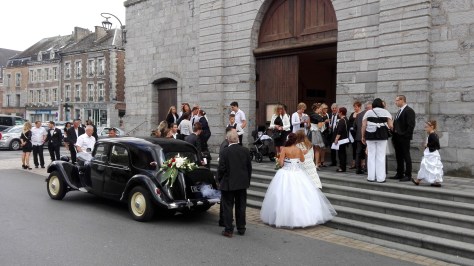
We also managed to catch a wedding while we were there…. nice car!!

Day 11 -Givet wedding