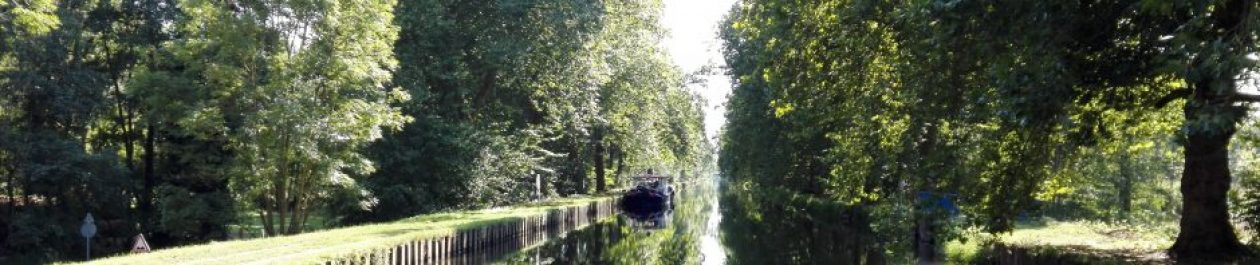
The River Sâone at Gray is wide and deep, one of the reasons the town had been an important port and trading centre for the Franche-Comté region.


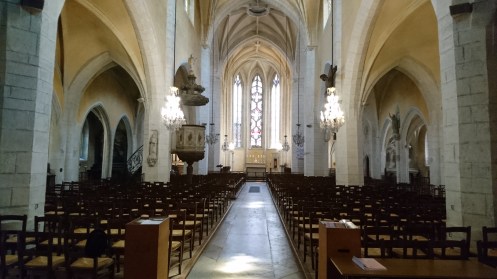
The town, population about 7,000, has several places of interest to a visitor. The 15th/16th-century Basilique Notre Dame is a fine church, well decorated with a nice bell tower.
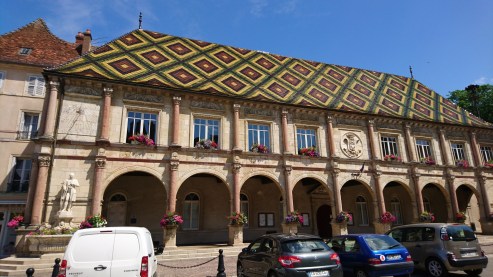
The Commune or Town Hall is a lovely Renaissance building with a colonnade, sundial, pink Jura stone columns and a roof of coloured glazed tiles like those found in Bourgogne.
The Saturday marché, it must be said, was something of a disappointment, but we were delighted to discover one of the few female boulangers we have come across, with a woodfired oven, no less.


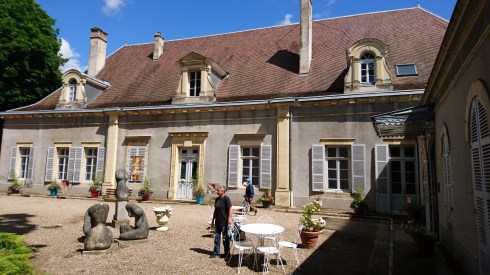
The Musée Baron Martin, an art museum, is housed in the chateau of the Count of Provence, brother of Louis XVI. It has a collection of 1200 interesting but not outstanding works – paintings, sculptures and Gallo-Roman relics.
The Hotel-Dieu, or ancient hospital, first constructed in the early 18th century, is an interesting survivor, now converted and overbuilt into a nursing home but containing the original chapel and apothecary within.


In Gray we came across our first encounters with the traboule, or staircase tower, which we later found many variants of throughout Franche-Comté and Bourgogne. Built into the side of buildings, with tiny windows and low doors, traboules are essentially covered stairwells, often located in the courtyards of communal buildings and providing entrances to private apartments.


Although we found no memorable dining in Gray, we enjoyed a few days exploring the town and would be inclined to visit again if we had the chance. The mooring at Quai Mavia is comfortable and convenient, although it has a dearth of electrical/water points to match the ample space for boats large and small.
 Scraping Through France