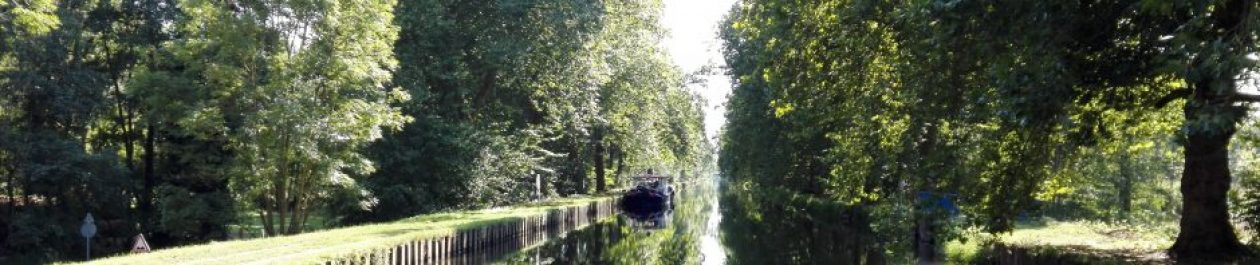
The end of May 2017 also saw the end of our sojourn on the Canal des Vosges, which we had entered in September 2016 in our first season. This canal, only 122 kilometres long, was built in the 1870s following the Franco-Prussian War, which saw France cede much of Alsace-Lorraine to the victorious Prussians, thereby losing important maritime trade routes along the Rhine. It is the southern part of what was originally named the Canal de l’Est, the longer northern portion now named the Canal de la Meuse.
After leaving Côney, we cruised into the small town of Fontenoy-le-Chateau which, it has to be said, has seen better days, most of them quite some time ago – although it did flourish as a centre of embroidery for a while in the 19th century. Nevertheless, it has a charm to it and rewards a couple of days of exploration. Its 10th-century Château began a long decline after the Thirty Years War in the 17th century and now consists mainly of the ruins of its keep.


Fontenoy also has a handsome 15th/16-century Gothic church, the Eglise Saint-Mansuy, much of which has managed to survive various depredations.


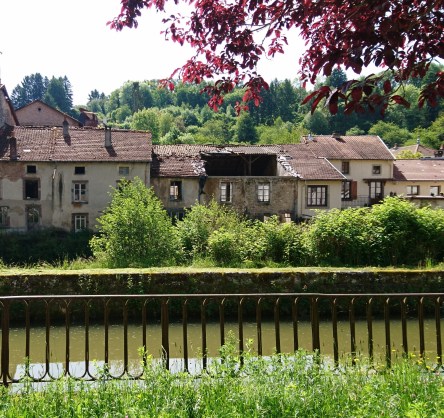
Not so much for some of the canalside houses… ironically, many of them were built using materials reclaimed from the château, although lately they’ve taken a bit of a beating.
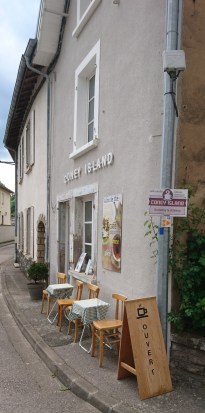
Even in this place, however, there is resistance to decay. We discovered a delightful maison de thé, with the charming name of Coney Island, where we enjoyed an ice cream and cake and nearly decent coffee.
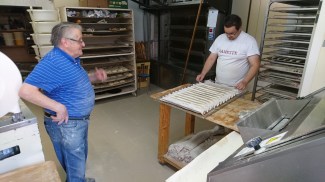
Our next stop, in Selles, did not reveal much beyond a very quiet village, except for a still-thriving boulangerie, for which we gave thanks.
Our last stop on the Canal before we entered La Petite Sâone was Corre. The town itself is not particularly interesting, although there are some interesting characters about, judging by canal traffic.


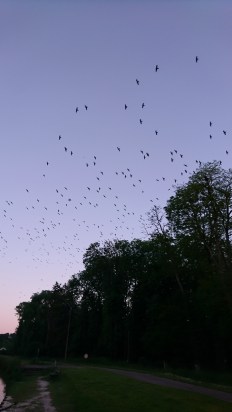
Corre is also blessed with a surfeit of crows, who gather in crowds in the evening despite the regular activities of people with guns aiming to reduce their number.
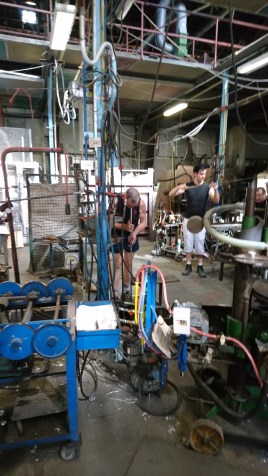
The most interesting aspects of Corre are the nearby attractions of the village of Jussey and the glassworks at the Verrerie de la Rochère, both of which we visited by hire car. Jussey is known for its waterworks…. its wells, fountains and wash houses (‘lavoirs’).


La Rochère is a fascinating centre of traditional and modern glassmaking, with daily demonstrations and a fabulous shop.
And now, we are set to leave the canals and flow with the river….
 Scraping Through France