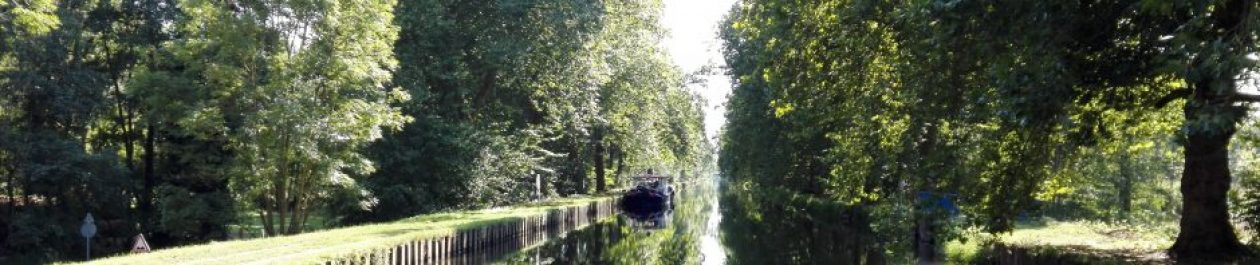
On August 18 we departed Namur and cruised our way for five hours along 28kms (6 locks) of calm, picturesque, winding Meuse River, to the swish surroundings of Anseremme. We moored on a long pontoon facing a row of very swanky houses and ate dinner that evening at the nearby Anseremme Yacht Club, a small marina off the river, home to some very expensive small boats.


We had cruised straight past the city of Dinant, because its docksides were undergoing major rebuilding, and we knew that it was an easy cycle back along the riverside from our picturesque, quiet mooring at Anseremme.
Dinant was worth a couple of days exploring, for sure. Hemmed in by steep limestone hills and cliffs of the Meuse valley, the city developed in a long thin riverside strip. Riding a cable car to the top of the Citadel de Dinant gives some fabulous views over the city and along the river. The citadel dates from the 11th century, with major modifications installed in the early 19th century.


The citadel also played a significant role in WWI when it was overrun by Saxon troops of the German army. French troops put up stiff resistance (a young Charles de Gaulle was among the wounded). The Saxons, blaming the citizens, committed the first massacre of civilians by Germans in the First World War when, on 23 August 1914, 674 inhabitants were summarily executed and the town was set alight, destroying hundreds of homes and other buildings.
On a brighter note, Dinant is the birthplace of of Adolphe Sax, inventor of the saxophone. It is also the home of a peculiar confection, the couque de Dinant, made with flour and honey into a firm dough, shaped in wooden moulds with patterns of animals, flowers, landscapes and human scenes, and baked at high temperatures into a hard, durable large biscuit. To be completely honest, we somehow missed the opportunity to sample it. But it looked impressive.


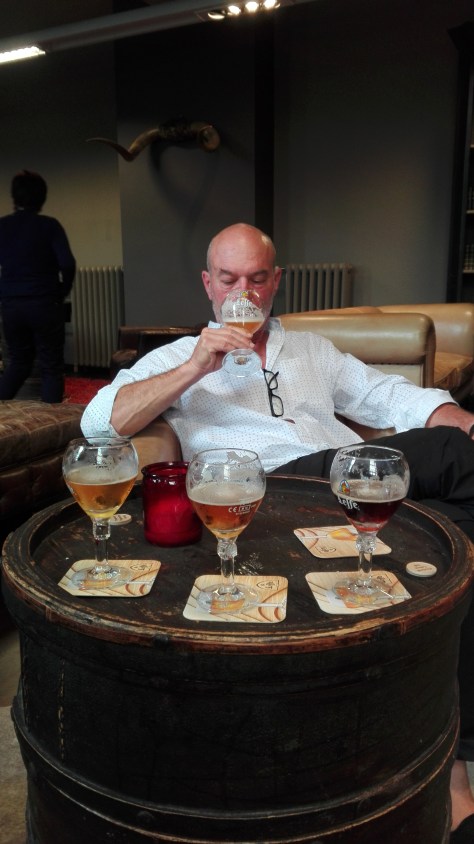
Much more enticing to our palate was the Maison Leffe, a charming historic edifice housing a museum and tasting-house dedicated to Leffe beer, which originated in the nearby Abbaye de Leffe, First produced by the monks and abbots in the 13th century, the brand is now owned under license by the global conglomerate Annheuser-Busch, but the values and taste of the old beer persist… it is one of the best ales I have ever tasted. There are about a dozen varieties in the range, but I am an avowed fan of good old Leffe Blonde, and Eben Haezer is almost never dry of it.
 Scraping Through France