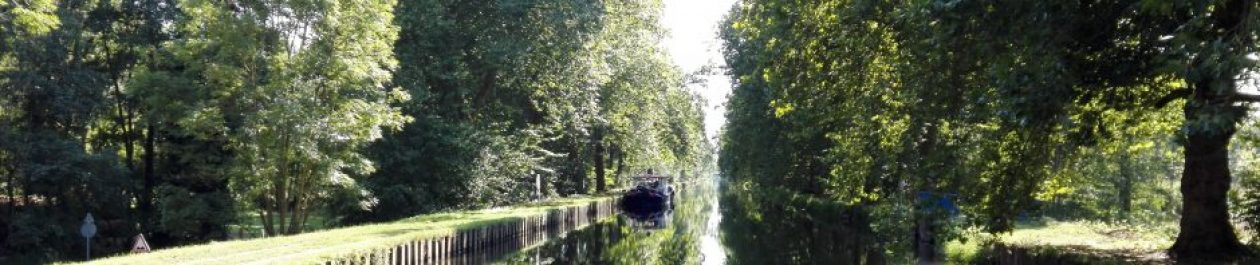
August 15 brought us a relatively easy day of slow travel, 27kms and 3 locks, to the city of Namur. There are two marinas here: the first, called Port de Plaisance Henri Hallet, is close to the city centre but is really only suitable for smaller vessels; the second, a little upstream and located in a gorgeous park setting, is called Port de Plaisance d’Amee, which is where we headed. Right by the mooring pontoons we discovered a lovely park with ever-active petanque courts; the next few days were filled with the muffled click-clack of boules.


Namur is a major commercial and industrial centre, and the capital of Wallonia. Located on a couple of major trade routes, it has a long history of being invaded, traded and governed by a variety of rulers, including the French, the Spanish, the Dutch and the Austrians, before becoming Belgian after independence in 1830 and then the capital of the federal region of Wallonia within Belgium. The city is best known for its chateau and citadel, the latter primarily the work of Louis XIV’s ubiquitous military engineer, Vauban.


Mooring at the Port de Plaisance was free, while power and water was accessed with jetons (tokens), purchased at the capitainerie. One token, worth €2, gave four hours of electricity, so it could cost up to €12 a day, or less if you used the power just to charge your boat’s auxiliary batteries.
During our three days at Namur we befriended Pierre, a retired Wallonian teacher, who lived on his boat with his wife Nicole, who still worked in Brussels and joined us on our last evening. Pierre was a great source of information and patient assistance with our French language skills, as well as being great company. On our final day we bought a couple of coquelettes at the local market and, using our small gas kettle BBQ, managed to roast them to a surprisingly good result, sharing them with with Pierre and Nicole, who contributed some delicious salads and a cheese plate.

While in Namur we decided to take the opportunity to refuel, having heard that there was a man who would deliver to the dock. With the help of Pierre and the capitain, we located our man, paid him the cash to purchase the fuel and waited for him to arrive, presumably in a van. We were amazed, though, to see him pull up an hour later on a bicycle, towing a purpose-built trailer loaded with eight jerry cans filled with 240 litres of diesel. As he unloaded each can we hauled them on board and poured the fuel manually into our fuel inlet, losing only a litre or two in spills but not thoroughly enjoying the smell on our hands, shoes and deck and more than a little concerned at the small but discernible slick that formed on the waterline. The cost of the fuel, including delivery, was as good as we might have achieved at a specialist dockside fuel outlet elsewhere, but we resolved to buy a small electric-powered fuel pump at the next opportunity, especially as we knew we would have cause to do the same transfer from jerry cans to fuel tank in the future.
 Scraping Through France